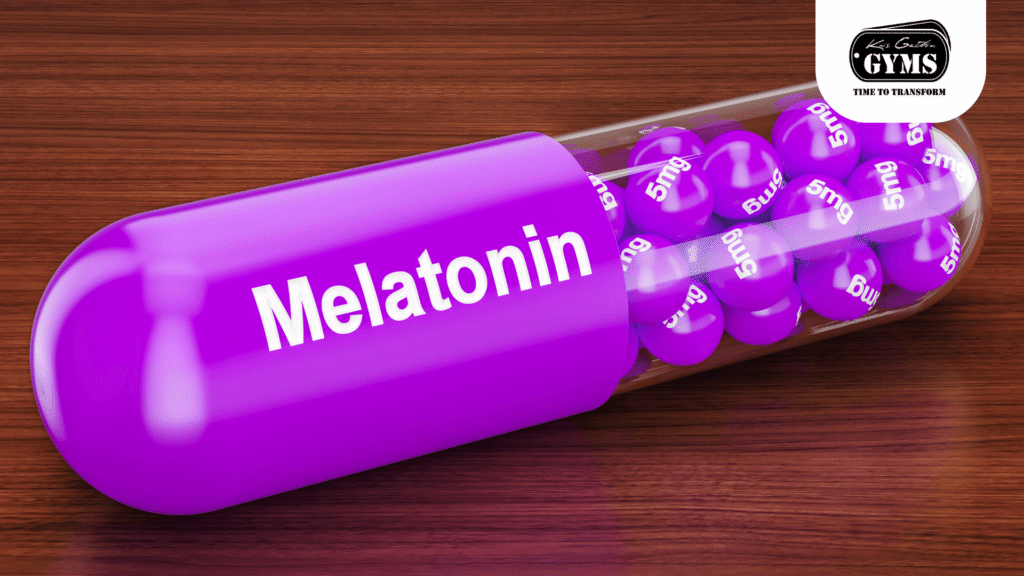
A client mentions they’ve started taking melatonin every night, “just to be safe,” at a dose that’s four times what any research actually supports.
That conversation happens more often than it should. Melatonin has become the default reach for anyone struggling with sleep, treated almost like a harmless nightly vitamin rather than what it actually is, a neurohormone with a specific job, real evidence behind certain uses, and genuine limits worth understanding before adding it to a routine.
What Melatonin Actually Does In The Body
Melatonin is produced primarily by the pineal gland, and its core job is regulating the sleep-wake cycle alongside the body’s broader circadian rhythm.
Light exposure directly suppresses its release, which is why levels naturally climb in the evening as darkness sets in, signaling the body to prepare for sleep onset and, ideally, sustained sleep through the night.
That mechanism matters because it explains exactly where melatonin helps and where it doesn’t. It’s not a sedative forcing sleep chemically. It’s a timing signal, which means its usefulness depends heavily on whether the actual problem is circadian misalignment or something else entirely.
Where The Evidence For Sleep Is Genuinely Strong
Melatonin’s clearest, most consistent benefit shows up in reducing sleep-onset latency and improving sleep quality specifically in situations involving circadian disruption, jet lag, shift-work sleep disorder, and delayed sleep-wake phase syndrome.
These are cases where the body’s internal clock is misaligned with the actual clock on the wall, and melatonin helps correct that mismatch directly.
Chronic insomnia tells a murkier story. Some trials show modest improvement, others show no meaningful benefit over placebo at all.
This distinction matters considerably for anyone considering melatonin, it’s a targeted tool for circadian problems, not a universal fix for every kind of sleep difficulty.
Someone struggling to fall asleep because of racing thoughts or chronic stress is dealing with a different problem than someone whose internal clock is genuinely out of sync with local time, and melatonin’s evidence base reflects that distinction clearly.
The Broader Health Effects Worth Understanding Realistically
Beyond sleep specifically, recent research suggests modest mood and anxiety improvements when sleep disruption is a clear driving factor, which makes sense given how tightly mood and sleep quality are linked physiologically.
Melatonin also shows some promising signals around glucose control in type 2 diabetes, minor weight changes, gut health, and immune function.
The honest caveat here matters more than the promising signal itself: these effects are variable across studies and not strong enough to treat melatonin as a standalone solution for any of these conditions.
Preliminary research has also explored potential roles in certain neurodegenerative diseases and as a supportive addition alongside standard cancer therapy, but this remains genuinely early-stage evidence, and it should never be treated as a reason to substitute melatonin for established medical treatment in either case.
What Melatonin Can Actually Do For Athletic Recovery
This is where melatonin becomes genuinely relevant to serious training, not just sleep management in isolation.
Athletes taking 3 to 6 mg roughly 30 to 60 minutes before bed have shown better maintained repeated sprint performance in research, along with reduced fatigue and measurably less muscle soreness lasting up to 72 hours after intense training.
That recovery window matters considerably for anyone training with real intensity multiple times per week, since accumulated soreness and fatigue, left unmanaged, is often what forces a deload before it was actually planned.
The dosing caveat here deserves real attention though. This range and timing should be individualized under proper guidance, not applied blindly, since taking melatonin at the wrong dose or timing can produce genuine grogginess or slowed reaction time the following morning, exactly the opposite of what an athlete chasing recovery actually wants heading into a training session.
Where Low-Carb And Keto Eating Fits Into This Picture
There’s a genuine, evidence-supported connection between well-formulated low-carb or ketogenic eating patterns and sleep quality, one that operates somewhat independently of melatonin supplementation itself.
These eating patterns appear to strengthen GABAergic tone, supporting deeper, more restorative slow-wave sleep, while also helping stabilize circadian rhythms and reduce sleep fragmentation, particularly in people managing metabolic or neurological conditions.
When paired with genuinely good sleep hygiene, controlling evening light exposure, keeping a consistent bedtime, and avoiding heavy meals late in the evening, a low-carb or keto approach can meaningfully complement what melatonin is already doing on the circadian side, rather than working against it or duplicating the same effect redundantly.
Getting Dosing And Timing Right
Melatonin dosing sits in a surprisingly wide range across research, typically 0.3 to 5 mg for general sleep support, with the higher end of 3 to 6 mg reserved for specific contexts like shift-work adaptation or athletic recovery under proper guidance.
Higher doesn’t automatically mean more effective here, and a client reaching for 10 mg nightly “to be safe” is usually working against the evidence rather than with it.
Timing matters just as much as dose. Taking melatonin 30 to 90 minutes before bedtime aligns with how the hormone naturally functions in the body, and for people specifically managing a delayed sleep-wake phase, dosing somewhat earlier in that window tends to work better than dosing right at bedtime.
Safety Considerations Worth Taking Seriously
Short-term melatonin use is generally considered safe, with the most common side effects being headache, drowsiness, and unusually vivid dreams, none of which are typically dangerous but are worth knowing about before starting.
The more practical safety concern sits with product quality rather than the hormone itself. Research has repeatedly found that many commercial melatonin products contain meaningfully more or less melatonin than what’s stated on the label, and some have shown contamination with serotonin, a genuinely unwanted addition in a sleep supplement.
Choosing a reputable, third-party tested brand matters considerably more with melatonin than with many other supplements, precisely because label accuracy in this category has proven inconsistent.
The Realistic Takeaway
Melatonin earns its strongest use case in genuinely circadian-related sleep problems, jet lag, shift work, delayed sleep phase, and offers real, if more modest, support for athletic recovery, mood, and select metabolic markers when used thoughtfully.
It’s not a universal insomnia cure, and it’s not a substitute for the foundational habits, consistent sleep timing, evening light management, and sensible nutrition, that actually build sustainable sleep quality over time.
This is precisely the kind of evidence-based, unglamorous thinking we bring to recovery programming at KRIS GETHIN GYMS. Melatonin can genuinely support serious training when used correctly, but it works best as one piece of a broader recovery strategy, not a shortcut that replaces the fundamentals.
Anyone considering regular supplementation, particularly athletes training intensely or managing an existing health condition, should talk it through with a healthcare provider first, especially given how much individual variation exists in how people actually respond to it.