Every client walking into a consultation these days can rattle off their protein target down to the gram. Ask the same person about their fiber intake, and you get a shrug.
That gap says a lot about how fitness nutrition conversations have gone in the last decade. Protein earned its spotlight fairly, muscle repair and satiety genuinely depend on it.
But somewhere along the way, fiber got filed under “digestive health” and quietly dropped out of the fat loss conversation entirely, despite doing real, measurable work in exactly the areas people are trying to improve.
What Fiber Actually Is, And Why The Body Treats It Differently
Fiber is a type of carbohydrate found in plant foods, but unlike other carbs, the body can’t fully break it down. Instead of being absorbed for energy the way starch or sugar is, fiber largely passes through the digestive system intact, and that difference is exactly what makes it so useful.
Two distinct types do different jobs. Soluble fiber dissolves in water and slows digestion, helping regulate blood sugar and lower cholesterol in the process.
Insoluble fiber adds bulk to stool and keeps digestion moving efficiently, preventing the sluggishness and constipation that quietly derail a lot of people’s sense of progress even when the scale is technically moving in the right direction.
Both matter, and most whole plant foods contain a mix of the two rather than one in isolation.
Why Fiber Deserves A Real Seat At The Fat Loss Table
Fiber doesn’t burn fat directly. What it does is make the entire process of maintaining a calorie deficit considerably less miserable, which matters more than people give it credit for.
High-fiber foods take genuinely longer to digest, and that slower digestion keeps hunger signals quieter for longer stretches between meals. This is the mechanism behind fiber’s biggest practical benefit, it reduces unnecessary snacking without requiring white-knuckle willpower to get there. A client eating a fiber-rich lunch simply isn’t raiding the pantry at 4 pm the way someone eating a refined, low-fiber meal often is, and that difference compounds meaningfully across a week of consistent eating.
Blood sugar stability plays a supporting role here too. Fiber slows how quickly sugar enters the bloodstream, which prevents the sharp spike-and-crash pattern that typically triggers cravings an hour or two after eating. Stable blood sugar translates into steadier energy throughout the day, which matters directly for training consistency, someone whose energy is crashing mid-afternoon is far less likely to show up for a quality session that evening.
Research consistently shows a real association here too, higher fiber intake correlates with lower body weight and healthier body fat percentages across populations studied. Fiber isn’t doing this through some direct fat-burning mechanism. It’s doing it by making appetite control and calorie management genuinely easier to sustain, which is ultimately what determines whether a fat loss plan survives past the first few motivated weeks.
Fiber’s Quieter Job: Keeping Digestion Actually Working
A digestive system that isn’t functioning well undermines nutrient absorption, and that has downstream effects on recovery and performance that rarely get connected back to fiber intake specifically.
Adequate fiber supports regular bowel movements, reduces bloating, and helps maintain a balanced gut microbiome, the community of bacteria increasingly understood to influence everything from immune function to how efficiently the body actually extracts nutrients from food.
A client complaining of persistent bloating or irregular digestion is often dealing with a fiber gap long before anything more complicated is actually the issue.
Where To Actually Find It
Fiber shows up across a wide range of familiar foods, and building a genuinely high-fiber diet doesn’t require anything exotic.
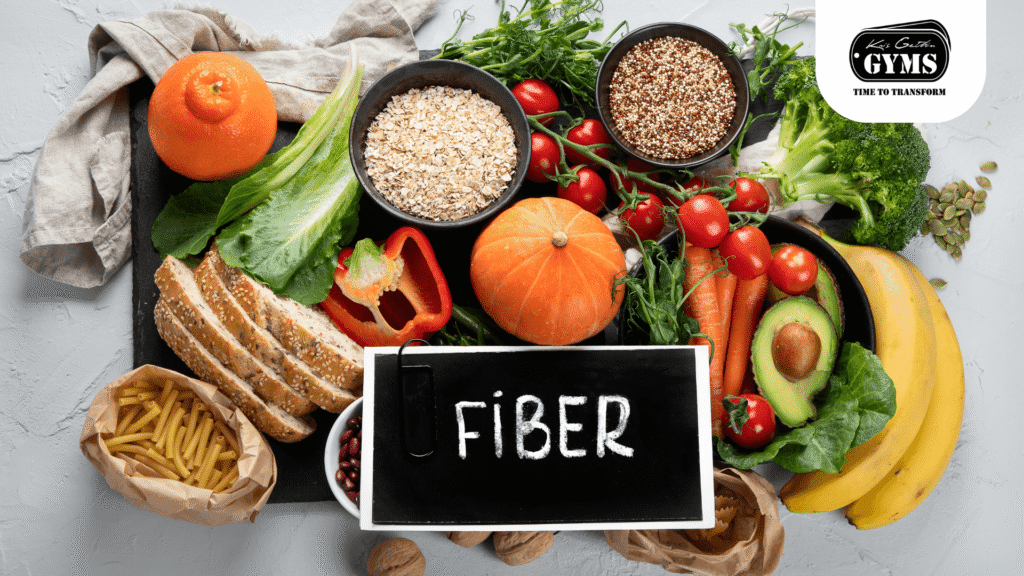
Oats, brown rice, and whole wheat bread cover the grain side. Lentils, beans, and chickpeas deliver fiber alongside real protein, making them particularly valuable for anyone building a plant-forward eating pattern.
Fruits like apples, berries, and bananas add fiber along with meaningful vitamin and antioxidant content. Vegetables, broccoli, spinach, and carrots specifically, round out the list, alongside chia seeds, flaxseeds, and almonds, which pack a genuinely high fiber density into a small serving size.
None of these foods are doing one job in isolation either, most are simultaneously supplying vitamins, minerals, and antioxidants that support recovery and overall training performance, making fiber intake and broader nutritional quality largely the same conversation.
How Much Is Actually Enough
Most adults should be targeting somewhere between 25 and 38 grams of fiber daily, with the exact number shifting slightly by age and gender. The uncomfortable reality is that most people fall well short of this range without realizing it, since fiber deficiency doesn’t announce itself the way a protein deficiency eventually does through visible muscle loss.
Closing that gap doesn’t require a dramatic diet overhaul. Adding a fruit or vegetable to every meal, choosing whole grains over refined versions as a default rather than an occasional swap, and working legumes into the weekly rotation several times over move the needle considerably.
Hydration matters here too, and it’s a detail people frequently overlook, fiber genuinely works best alongside adequate water intake, since fiber without enough fluid can actually worsen digestive discomfort rather than improve it.
Timing Fiber Around Training
Fiber is excellent for daily health, but timing does matter when training intensity enters the picture.
A large, high-fiber meal eaten immediately before an intense session can cause genuine stomach discomfort for a lot of people, the same slow digestion that makes fiber so useful for satiety becomes a liability when the body needs to be focused on performance rather than digestion.
The practical fix is straightforward: spread fiber-rich foods across the day rather than front-loading them right before training, and lean toward more easily digestible carbohydrates in the immediate pre-workout window if a snack is genuinely needed.
Why This Belongs In Every Serious Nutrition Conversation
Protein remains essential for anyone building muscle or protecting lean mass through a deficit, that hasn’t changed. But treating fiber as an afterthought, something that only matters for “digestive health” rather than genuine fat loss and performance, leaves real, measurable results on the table.
This is exactly the kind of complete-picture nutrition thinking our coaches build into programming at KRIS GETHIN GYMS, protein for muscle, fiber for appetite control and metabolic stability, working together rather than one crowding out the other.
A client hitting their protein target while ignoring fiber entirely is still leaving hunger control, blood sugar stability, and digestive health on the table, three variables that directly determine whether a fat loss plan actually survives contact with a real week.
The Practical Takeaway
Fiber is one of the more underrated levers in fitness nutrition, quietly influencing appetite, digestion, blood sugar, and long-term body composition without ever demanding the same spotlight protein gets.
Building a genuinely fiber-rich diet, oats, legumes, vegetables, fruit, a handful of nuts and seeds, paired with adequate hydration and sensible timing around training, creates a foundation that makes every other part of a nutrition plan considerably easier to sustain.