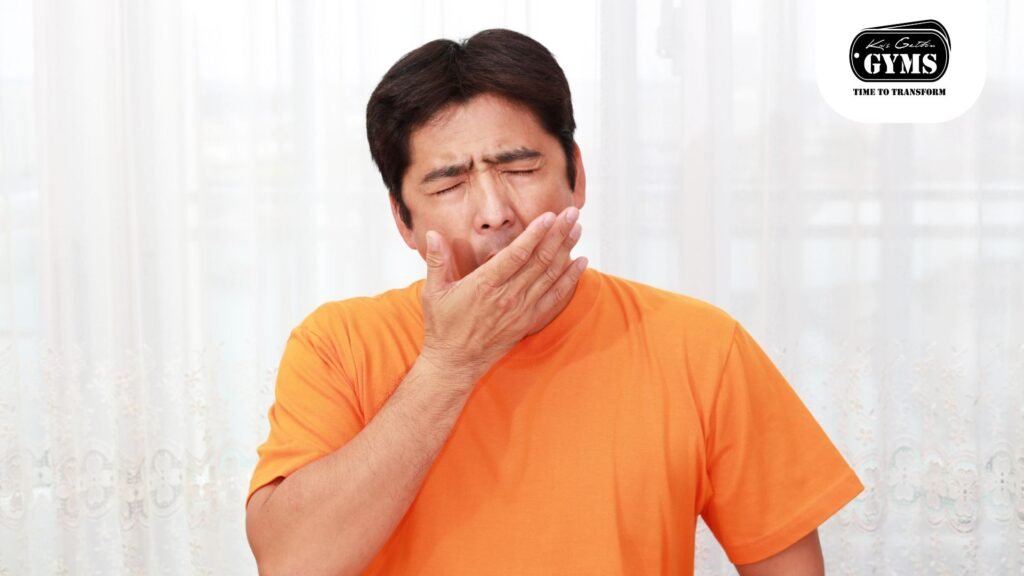
Wearing five hours of sleep like a badge of honour is one of the most common habits on any gym floor, and one of the costliest.
Our coaches at KRIS GETHIN GYMS see it constantly. A client trains hard, eats carefully, and stalls. When we look closely, the training and the food are fine. The recovery is not. You trigger the stimulus under the barbell, but the adaptation happens while you are asleep.
Cut the sleep short and you cut the part of the process that actually produces the result.
How Much Sleep Adults Actually Need
The American Academy of Sleep Medicine and the Sleep Research Society recommend that adults get 7 or more hours of sleep a night on a regular basis. The broader range used in most coaching is 7 to 9 hours of consolidated sleep for good physical performance.
Where you sit in that range depends on your load. Someone with a desk job and light training can do well at the lower end. A lifter running high volume, or anyone cutting calories, usually needs the upper end, because more tissue breakdown calls for more recovery time. Consistently falling below 7 hours is where the problems start to stack up.
What Short Sleep Does To Your Hormones And Body
When sleep is cut, the body shifts away from building and toward breaking down. Several effects are well documented.
Testosterone drops. In a study published in JAMA, healthy young men restricted to 5 hours of sleep a night for one week had daytime testosterone levels fall by roughly 10 to 15%. That is a large hormonal swing for seven nights of poor sleep.
Fat loss gets harder. Sleep restriction is linked with higher evening cortisol and reduced insulin sensitivity. The body becomes less willing to burn fat and more willing to hold on to it, and lean tissue becomes easier to lose during a calorie deficit.
Hunger rises. Short sleep is associated with higher ghrelin, the hunger hormone, and lower leptin, the fullness hormone. Trials have found that sleep-restricted people eat several hundred extra calories a day, often from sugary, high-fat foods. That is enough to erase a planned deficit without anyone noticing.
Muscle repair slows. Research has reported that even a single night of total sleep deprivation reduces muscle protein synthesis rates by around 18%. Training hard on top of that is working against yourself.
Study numbers vary between trials and people, so treat these as typical findings rather than guarantees. The direction is consistent: less sleep means a worse hormonal and metabolic environment for progress.
What Happens Inside A Night Of Sleep
A night is not one block of rest. You cycle through stages of roughly 90 minutes, about four to six times a night, and each stage does different work.
| Stage | Approx. Share Of Night | Main Function |
|---|
| Light sleep (N1 and N2) | 50-55% | Heart rate and body temperature fall, motor skills are consolidated |
| Deep sleep (N3, slow-wave) | 15-25% | Peak repair window, with most daily growth hormone release, tissue regeneration |
| REM sleep | 20-25% | Brain and nervous system restoration, reaction time, coordination, focus |
Deep sleep is front-loaded in the early cycles, while REM sleep builds up in the final hours. That is why cutting a night short by 90 minutes costs you more than 20% of the benefit.
You lose a large share of the REM sleep that sharpens coordination and focus, and shorter nights tend to squeeze out the best recovery windows overall.
A Practical Protocol For Better Sleep
Most people try to “sleep more” without changing anything else. These habits do more.
1. Keep a fixed wake time. Wake within about 15 minutes of the same time every day, including weekends. Morning light helps set your internal clock, which then times melatonin release for the evening.
2. Set a caffeine cut-off. Caffeine has a half-life of roughly 5 to 7 hours. A 4 PM pre-workout or strong coffee can leave a meaningful amount still active in your system at bedtime and reduce deep sleep even if you fall asleep easily. Many people do well stopping caffeine around 8 to 10 hours before bed. Sensitivity varies, so adjust to how you respond.
3. Cool the room. Core body temperature needs to fall slightly to start and sustain deep sleep. A bedroom around 18 to 20°C is a common target. A warm shower an hour before bed can also help, because it draws heat to the skin and then lets it escape.
4. Dim the lights and park the phone. Bright overhead lights and screens suppress melatonin and push back sleep onset. Dim the house for the last hour and, if you can, keep the phone outside the bedroom.
5. Watch your readiness signals. If you use a wearable, trends in resting heart rate, heart rate variability, and sleep consistency can show when you are under-recovered. A resting heart rate running several beats above your normal, with falling HRV, is a good reason to lower training volume for a few days. Treat wearable sleep stage data as a rough guide, since wrist devices are not precise.
Sleep For Indian Professionals
Late meetings, long commutes, and family dinners that run past 10 PM make sleep the first thing to give way. The fix is rarely heroic. Protect the wake time first, move the caffeine cut-off earlier, and keep one fixed wind-down habit, such as dimming lights and putting the phone away. Small, repeatable steps beat a plan that collapses by Wednesday.
If you snore heavily, wake up exhausted despite long nights, or struggle with sleep for weeks, speak to a doctor. Sleep apnoea and other conditions are common and treatable, and no routine fixes them on its own.
The Takeaway
Sleep is not what you do after training. It is part of training. Seven to nine hours, kept consistent, protects testosterone, supports fat loss, keeps appetite in check, and lets your muscles rebuild.
At KRIS GETHIN GYMS, recovery gets the same priority as the work itself, because the work only pays off if the body has time to respond.
Before you add another session or another supplement, fix the hours.