Ask five lifters in any Indian gym about Creatine and you will hear five answers. One thinks it is a steroid. One is sure it wrecks the kidneys. One is taking 20 grams a day because a forum said so, and one has been “cycling” it for two years.
All of them are working from noise. Creatine is one of the most heavily researched supplements in sports nutrition, with well over a thousand peer-reviewed studies behind it, and the practical advice fits on an index card.
Our coaches at KRIS GETHIN GYMS spend more time undoing creatine myths than explaining the science, so here is the full picture in one place.
What Creatine Actually Does
Creatine is a naturally occurring compound, found mainly in red meat and fish, and stored in your muscles as phosphocreatine. It is not a steroid and it does not build muscle directly.
Here is the mechanism. During hard efforts like lifting or sprinting, your muscles burn ATP for energy, and the supply runs out within seconds. Phosphocreatine helps regenerate ATP quickly. More phosphocreatine means more ATP on tap, which means more quality work before fatigue forces you to stop.
In practice, that usually shows up as one to three extra reps at the same weight. It sounds small. Stack those reps across a few months of training and you have meaningfully more total volume, which is what drives growth. The International Society of Sports Nutrition has concluded that creatine monohydrate is the most effective supplement available for high-intensity exercise capacity and lean mass. A 2026 meta-analysis also found that people newer to lifting saw some of the biggest strength gains.
Why Indian Vegetarians Should Pay Closer Attention
Creatine comes mainly from meat and fish, so vegetarians and vegans tend to carry lower muscle stores, often 20 to 30% lower than meat-eaters. In a country where a large share of lifters eat vegetarian, that gap matters.
Supplementation raises those stores, often to levels comparable with or above those of meat-eaters. Here is the honest nuance: the research on whether this produces bigger performance gains in vegetarians is less consistent than you will read in many supplement articles. Some studies show larger responses, others show similar ones. What is clear is that vegetarians start from a lower baseline and have more room to benefit. If you eat vegetarian and train seriously, creatine is one of the more sensible supplements to try.
How To Take It
The protocol is almost boring:
- Dose: 3 to 5 grams of creatine monohydrate daily.
- Timing: Daily consistency matters far more than whether it is before or after training.
- Loading: Optional. Taking 20 grams a day for a week saturates your muscles a few days faster, but a steady daily dose reaches the same level in about three to four weeks, without the stomach upset some people get from loading.
- Cycling: Unnecessary. No research supports it, because the goal is to keep your stores topped up.
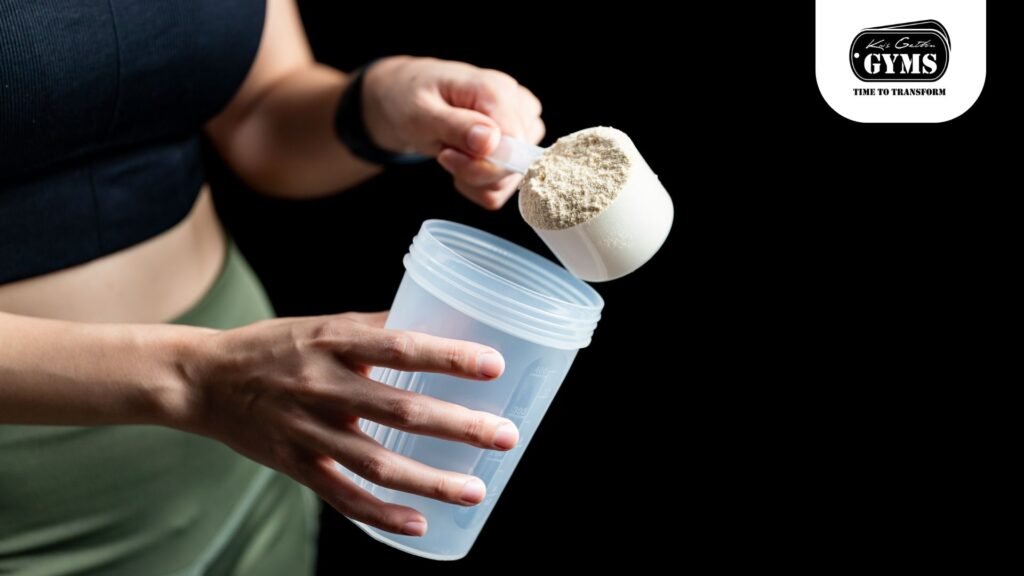
Muscle stores have a ceiling. Extra creatine beyond that point is simply excreted, so more does not mean better. Mix it into water, chai that has cooled slightly, a shake, or curd. It dissolves best in warm or room-temperature liquid.
Choosing A Product
Stick to creatine monohydrate, the form with the deepest research behind it. Fancy variants such as HCl or “buffered” creatine carry bigger price tags without better evidence.
Indian brands such as MuscleBlaze, AS-IT-IS, and Optimum Nutrition all sell plain monohydrate. Micronized versions dissolve a little more easily. Prices shift often, so compare cost per 5g serving rather than the sticker price, and look for a clear ingredients list with nothing added, plus third-party lab testing where available. Buy from authorised sellers, because supplement counterfeiting is a real problem online.
Myths Worth Dropping
“Creatine damages the kidneys.” The International Society of Sports Nutrition review found no kidney dysfunction in healthy people at standard doses. The myth traces back to a case involving someone who already had kidney disease. If you have a kidney condition, speak to your doctor before supplementing, and the same applies if you take regular medication.
“Creatine causes hair loss.” This idea traces to one small study that measured a hormone marker, DHT, not actual hair loss, and it has not been convincingly replicated.
“It is a steroid.” It is not. It is a compound your body makes itself and that you already get from food.
“It makes you bloated.” A small early increase in water inside the muscle is possible, usually mild, and often settles down. That is water stored within muscle cells, not the puffy look people fear.
What Creatine Will Not Do
Setting expectations honestly matters, because disappointment is the main reason people quit.
Creatine will not burn fat. It will not do much for long endurance, since its benefit is strongest in efforts under about 30 seconds. It will not build muscle on its own, because you still need a training stimulus and enough food.
And roughly 20 to 30% of people are non-responders who notice little change. If you see nothing after about four weeks of consistent use, you may be one of them, and it is fine to stop.
Some newer research also points to possible memory benefits, most clearly in older adults, but the wider brain claims are still being studied. Treat that as an interesting bonus, not a reason to buy.
Making Creatine Work Inside A Real Programme
A supplement only amplifies what you are already doing. Creatine pairs best with a training plan built on progressive overload, adequate protein, and enough sleep.
Our coaches treat it as the last 5% of a programme, never the first. If your training is inconsistent or your protein is low, fix those first.
That is the approach we apply at KRIS GETHIN GYMS : build the foundations, then add the small things that carry real evidence. Creatine earns its place on that short list.
The Takeaway
For most healthy adults, the plan is simple. Buy a tub of pure creatine monohydrate, take 3 to 5 grams daily, and give it four to eight weeks while you keep training hard. Results build gradually.
If you are vegetarian, you have a particularly good reason to try it. If you have a medical condition, check with your doctor first.