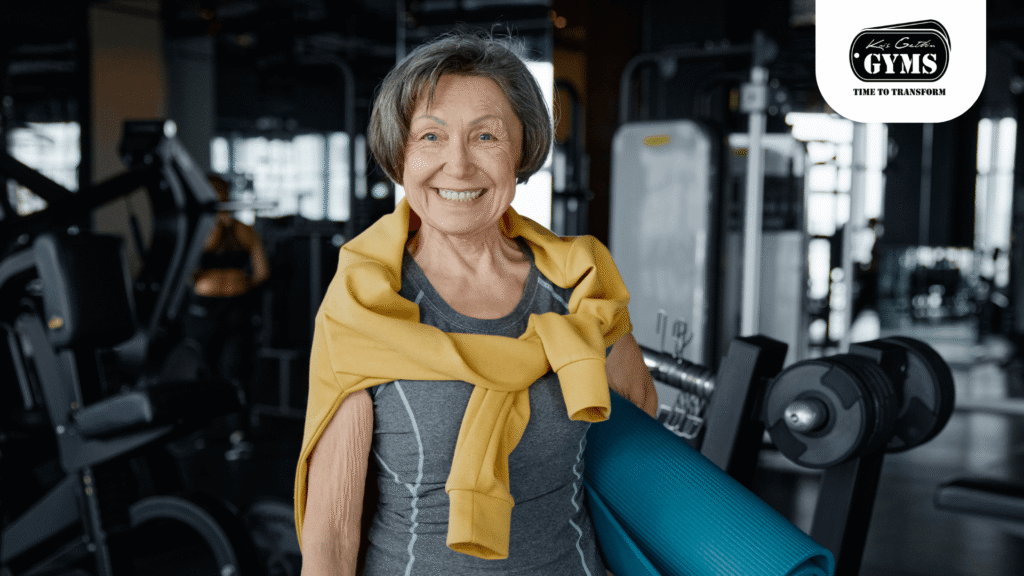
There comes a stage in life when many women begin noticing changes that don’t quite make sense.
The number on the weighing scale starts creeping up, even though eating habits haven’t changed much. Climbing a flight of stairs feels slightly more demanding. Carrying grocery bags becomes tiring. Energy seems to disappear earlier in the day, and recovery from everyday activities takes a little longer than it used to.
Most people assume this is simply what getting older looks like.
It isn’t.
A large part of what many women experience after 40 isn’t ageing alone. It’s the gradual loss of muscle strength that naturally occurs with time, combined with hormonal changes that become more noticeable during and after menopause.
The encouraging news is that this isn’t something you simply have to accept.
Strength training remains one of the most effective ways to slow these changes, protect your body, and continue living an active, independent life for years to come.
At KRIS GETHIN GYMS, we’ve seen women in their fifties, sixties, and even seventies surprise themselves—not by lifting extraordinary weights, but by discovering how much stronger they can become when they follow the right programme.
Strength Isn’t About Looking Like a Bodybuilder
One of the biggest misconceptions still surrounding weight training is the fear of becoming “too muscular.”
In reality, that almost never happens.
Women naturally have much lower testosterone levels than men, making significant muscle growth far more difficult. What strength training actually builds is something much more valuable.
It helps create a stronger body.
A more stable posture. Better balance. Greater confidence. And perhaps most importantly, it helps preserve the muscle your body naturally begins losing with age.
That preservation becomes incredibly important after 40. Without regular resistance training, muscle mass gradually declines year after year. As muscles become smaller, metabolism slows down too, making weight management increasingly challenging even if eating habits remain unchanged.
This is often the real reason many women feel frustrated. They believe their body has suddenly started working against them. In reality, it simply needs a different kind of stimulus.
Menopause Changes the Rules – But Not the Goal
For many women, menopause feels like someone quietly rewrote the rulebook. Sleep becomes unpredictable. Energy fluctuates.
Body fat seems to settle in different places. Mood changes become more noticeable. Bone health becomes an increasing concern.
These changes are real. But they’re also one of the strongest arguments for introducing strength training into your weekly routine.
Resistance exercises place healthy stress on bones, encouraging them to remain stronger and denser over time. This becomes particularly valuable because declining oestrogen levels during menopause can accelerate bone loss and increase the risk of osteoporosis.
Strong muscles also provide better support for joints, reducing everyday aches while improving overall movement.
It’s not about reversing age. It’s about preparing your body to age well.
Everyday Life Becomes Easier
The biggest victories rarely happen inside the gym. They happen outside it.
We’ve spoken to women who were delighted simply because they could lift a heavy suitcase without asking for help.
Others noticed they could get up from the floor more comfortably after playing with their grandchildren.
Some realised long walks no longer left them exhausted.
These moments rarely appear on social media.
Yet they’re often far more meaningful than any personal best in the gym. Strength training isn’t only preparing you for your next workout. It’s preparing you for everyday life.
Starting Doesn’t Mean Starting Heavy
One mistake beginners often make is believing strength training automatically involves heavy barbells and intimidating free-weight areas.
It doesn’t.
Some of the most successful programmes begin with nothing more than controlled bodyweight movements.
Simple squats. Wall push-ups. Step-ups. Glute bridges. Resistance bands. Machine-based exercises.
Each movement teaches the body how to move efficiently before additional weight is introduced.
That’s one reason many women feel more comfortable beginning with guided resistance machines.
The movement path is controlled, allowing them to focus on technique instead of worrying about balance or coordination.
As confidence grows, so does strength.
Only then does it make sense to introduce dumbbells, barbells, or more advanced exercises.
Progress isn’t measured by how quickly you lift heavy. It’s measured by how consistently you improve.
Why Recovery Matters More Than Ever
One lesson experienced lifters learn over time is that muscles don’t become stronger during workouts.
They become stronger afterwards. Recovery is where the adaptation happens.
That makes rest days just as valuable as training days.
For women over 40, quality sleep, hydration, balanced nutrition, and proper recovery become even more important than simply adding extra workouts.
Training hard every single day isn’t the goal. Training intelligently is.
At KRIS GETHIN GYMS, programmes are designed with this in mind, ensuring members challenge themselves while still allowing enough recovery to return stronger for the next session.
The Exercises That Deliver the Greatest Return
There isn’t a magical exercise that every woman over 40 must do.
The best programme is always the one that’s appropriate for your current fitness level, health history, and goals.
That said, certain movements consistently provide more value because they strengthen the muscles we rely on every single day.
Exercises such as the leg press help build lower-body strength without placing unnecessary stress on the back. Walking lunges improve balance and coordination while strengthening the legs and glutes. Seated rows encourage better posture by strengthening the upper back—something many women appreciate after years of desk work or daily household activities.
Machine chest presses and overhead presses develop upper-body strength that makes everyday tasks like lifting shopping bags, placing luggage in overhead compartments, or moving furniture noticeably easier.
Core training also deserves far more attention than it often receives.
A stronger core isn’t about achieving visible abs. It’s about creating stability throughout the body. Good core strength improves posture, supports the lower back, enhances balance, and reduces the likelihood of falls—something that becomes increasingly important with age.
The goal isn’t to master every exercise in the gym. It’s to consistently perform a handful of effective movements with good technique.
Consistency Always Beats Intensity
Many people begin their fitness journey full of enthusiasm.
They train five or six days in the first week. Everything hurts. Life gets busy. By the third week, they’ve stopped altogether. We’ve seen this cycle countless times.
The women who experience the greatest long-term success usually take a completely different approach. They focus on showing up.
Three well-planned strength sessions each week often produce far better results than an unsustainable burst of motivation followed by weeks away from the gym.
Progress becomes surprisingly predictable when training turns into a habit rather than a temporary challenge.
Strength doesn’t arrive overnight. It accumulates quietly, session after session.
Confidence Grows Alongside Strength
One of the most rewarding changes isn’t physical.
It’s psychological.
There’s something remarkably empowering about realising your body is capable of more than you believed. The woman who once hesitated before lifting a pair of dumbbells eventually performs exercises she never imagined possible. The member who once avoided the strength area begins walking through the gym with confidence. That confidence often extends well beyond fitness.
People stand taller. Move with more assurance. Become less afraid of physical challenges. The transformation is rarely limited to muscle. It changes the way people see themselves.
And that’s difficult to measure on a weighing scale.
Why Coaching Makes a Difference
Strength training is one of the safest and most effective forms of exercise when performed correctly.
Technique matters. Progression matters. Recovery matters.
Having experienced coaches who understand these details removes much of the uncertainty that beginners often feel.
At KRIS GETHIN GYMS, the focus isn’t on pushing members to lift the heaviest weights in the room.
It’s about helping them move well, build strength progressively, and train with confidence.
Every woman arrives with a different starting point.
Some have exercised for years. Others are stepping into a gym for the very first time.
The programme should reflect that. Good coaching meets people where they are – not where someone else thinks they should be.
It’s Never Too Late to Become Stronger
Perhaps the biggest misconception of all is believing that strength has an age limit.
It doesn’t.
The body continues adapting when it’s given the right stimulus, proper nutrition, and enough recovery.
We’ve watched women discover new confidence in their fifties.
Others build more strength in their sixties than they had in decades.
Some simply wanted to keep up with grandchildren without feeling exhausted.
Every goal is valid. Every improvement matters.
Strength training isn’t about chasing youth. It’s about protecting your future.
The stronger you become today, the more freedom your body is likely to give you tomorrow.
Conclusion
Turning 40 doesn’t mean lowering your expectations for what your body can achieve.
If anything, it’s the stage of life where strength training becomes even more valuable.
Building muscle, maintaining bone density, improving balance, supporting joint health, and boosting confidence are benefits that extend far beyond the gym floor. They influence how you move, how you feel, and how independently you can live in the years ahead.
At KRIS GETHIN GYMS, strength training isn’t viewed as a trend or a short-term fitness programme. It’s part of a long-term approach to healthier ageing – built around expert coaching, structured progression, and training that’s designed to meet you where you are today while preparing you for the years ahead.
Because becoming stronger after 40 isn’t about proving something to others. It’s about giving yourself every opportunity to continue living life on your own terms.