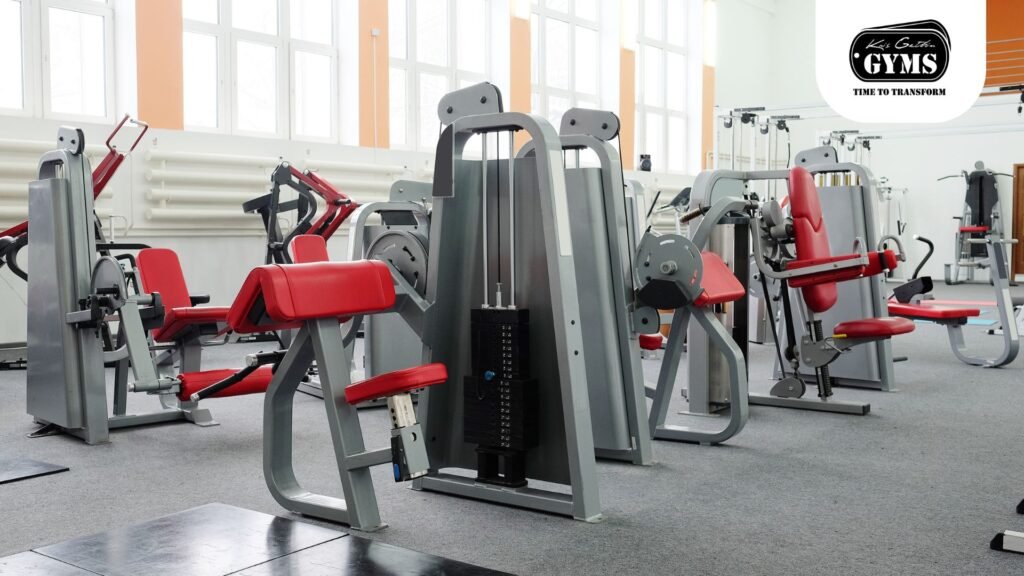
Walk into a gym two years after opening and you can usually tell within five minutes whether the owner planned the equipment purchase properly or bought on instinct.
The tell isn’t the brand names on the machines. It’s the treadmill with a maintenance sticker from four months ago sitting broken in the corner, the strength floor overcrowded while three cardio machines sit half-used, the flooring already showing cracks under a rack that never should have sat on it in the first place.
None of these problems announce themselves at the time of purchase. They show up eighteen months later, as repair bills and empty membership slots, once the decision has already been made and paid for.
Mistake 1 : Buying On Price Instead Of Total Cost Of Ownership
Most buyers stop at the sticker price. That number is only the starting point, not the real cost of owning a machine for years of daily commercial use.
Total cost of ownership includes the purchase price, delivery and installation, routine servicing, staff training, and repair costs that fall outside warranty coverage. A budget treadmill in a commercial setting may survive roughly 500 hours of use before failing, while a genuinely commercial-grade unit is engineered for years of continuous daily operation. Replacing the cheaper machine two or three times over five years ends up costing considerably more than buying the right one once.
What to do instead: Calculate the full 5-year cost, purchase price plus annual servicing plus likely parts replacement plus the revenue lost when a machine sits broken during peak hours, before comparing options on price alone.
Mistake 2 : Buying Home-Grade Equipment For Commercial Use
A machine that looks identical to a commercial unit on a showroom floor may carry a residential-use rating that voids its warranty the moment it enters a gym.
| Factor | Home-Grade Equipment | Commercial-Grade Equipment |
|---|
| Designed weekly use | 3–5 hours | 50–80+ users daily |
| Motor rating | Peak HP, often misleading | CHP (continuous horsepower) |
| Typical lifespan in a gym | Under 500 hours | Multiple years, continuous use |
| Warranty in commercial setting | Often voided | Valid |
| Apparent savings at purchase | ₹30,000–50,000 | – |
| Actual cost within 18 months | ₹1–2 lakh in premature repairs | Predictable servicing only |
What to do instead: Always request the commercial-use certification on the spec sheet. If it doesn’t explicitly say “commercial-grade” or “commercial-duty rated,” it doesn’t belong on a gym floor.
Mistake 3 : Skipping Space Planning Before Buying
Measuring the space comes before selecting equipment, not after, and skipping this step is what produces a cramped, unsafe floor that frustrates members during exactly the hours the gym needs to run smoothly.
A commercial gym needs a minimum of 10 to 20 sq. ft. of clearance per machine or active user. Cardio machines specifically need at least 3 feet of clearance behind each unit for safe emergency stops, and free-weight zones need open floor space in front of racks for lifters to actually move.
What to do instead: Draw the floor plan first, marking zones for cardio, strength, free weights, functional training, and stretching, then only buy machines that fit within those zones with proper clearance already accounted for.
Mistake 4 : Getting The Cardio-To-Strength Ratio Wrong
Cardio equipment typically occupies around 20% of gym floor space, strength equipment around 15%, and getting that balance wrong creates bottlenecks in one category while the other sits underused.
| Facility Type | Recommended Equipment Balance |
|---|
| Bodybuilding-focused gym | Heavier weighting toward strength equipment |
| General fitness center | Roughly equal cardio, strength, and functional training |
| Boutique/functional studio | Functional training-heavy, moderate cardio and strength |
What to do instead : Define the target member profile before finalizing an equipment list, through a genuine survey or study of the local catchment demographic, rather than copying what another gym in a different city happens to have on its floor.
Mistake 5 : Ignoring After-Sales Support At Purchase Time
Buying the equipment is only the beginning. A machine breaking down during peak morning hours with a two-week wait for a technician directly costs member satisfaction and daily revenue.
Questions worth asking every supplier before signing:
- Do you have a service team in my city?
- What’s your average on-site response time?
- Are spare parts stocked in India or shipped internationally?
- What does the AMC actually cover, and what’s excluded?
- Does my warranty stay valid without an AMC?
Indian manufacturers with domestic production and service tend to offer meaningfully shorter response times and locally stocked parts compared to brands relying on international supply chains, a distinction that matters considerably more for gym owners outside major metros.
What to do instead: Treat after-sales support as a non-negotiable selection criterion. Ask for references from other gym owners already using that supplier’s service team, and get response time commitments in writing.
Mistake 6 : Buying Trend-Driven Equipment Over Proven Machines
Air bikes, curved treadmills, and smart-connected machines all have their moment. Some genuinely improve a gym’s offering. Others sit unused once the novelty fades, quietly eating floor space better used for equipment members actually train on daily.
The average gym owner uses only around 30% of purchased equipment regularly, with single-purpose novelty machines showing particularly low long-term usage in shared facilities.
What to do instead: Only add trend-driven equipment once the core mix, treadmills, ellipticals, strength machines, free weights, functional stations, is fully covered. Adding novelty gear in place of proven equipment to look modern is the mistake worth avoiding.
Mistake 7 : Underestimating Flooring
Gym flooring is a safety requirement and equipment protection investment, not a cosmetic afterthought.
| Zone | Correct Flooring |
|---|
| Cardio and strength machines | Rubber tiles/rolls, 8–12mm |
| Free weight zone | Thicker rubber, 15mm or more |
| Stretching/warm-up zone | Foam tiles |
| Under any heavy equipment | Never marble, ceramic, or polished concrete |
Skipping proper flooring creates a genuine safety risk and lets equipment vibration damage the underlying floor structure over time, and it’s considerably more expensive to retrofit correctly after machines are already installed.
What to do instead: Budget commercial rubber flooring as part of the equipment spend itself, not a separate line item to consider later.
Mistake 8 : Not Planning For Growth
Many gyms buy exactly enough for day one with no buffer for what happens when membership grows and popular machines start showing 10-minute wait times during peak hours, exactly the moment new members start looking elsewhere.
What to do instead: Design the floor for 120% of expected launch-day footfall. If 100 active daily members are expected at opening, plan the floor and equipment layout for 120, leaving two or three positions where machines can be added later without disrupting the existing layout, keeping electrical and flooring coverage ready in advance.
Mistake 9 : Overlooking Power And Ventilation
Commercial cardio equipment draws real electrical load. A floor with 10 treadmills, 6 ellipticals, and 4 exercise bikes can pull 30 to 60 amps under simultaneous use, something many owners only discover after installation when the panel trips repeatedly during morning rush.
What to do instead: Have a qualified electrician review capacity against the full planned equipment load before finalizing the space, and confirm the HVAC plan can maintain 18°C to 22°C with adequate air circulation during peak hours.
Mistake 10 : Skipping A Maintenance Budget From Day One
Consistent maintenance extends equipment life more effectively than almost any other single operational decision, yet many gyms launch with no maintenance budget at all, turning the first major repair into a financial shock at the worst possible time.
Industry guidance suggests reserving 2 to 5% of monthly revenue for maintenance. For a gym generating ₹5 lakh monthly, that’s ₹10,000 to ₹25,000 reserved for servicing, a manageable, predictable cost compared to an emergency motor replacement on short notice.
What to do instead: Build the maintenance schedule before opening, daily wipe-downs, weekly cable and belt checks, monthly structural inspections, a 6-monthly professional service visit, and budget an AMC with the equipment supplier from year one.
Quick Reference : All Ten Mistakes And Their Fixes
| Mistake | What It Costs | The Fix |
|---|
| Focusing only on purchase price | Higher 5-year total spend | Calculate total cost of ownership upfront |
| Buying home-grade machines | Voided warranty, early failure | Confirm commercial-use rating |
| Skipping space planning | Overcrowding, safety risks | Draw the floor plan first |
| Wrong cardio-to-strength ratio | Member attrition, bottlenecks | Define member profile before buying |
| Ignoring after-sales support | Long repair delays | Verify service network and response time |
| Chasing trends over needs | Underused, wasted floor space | Cover core categories first |
| No flooring plan | Safety hazards, structural damage | Budget flooring with equipment |
| No expansion planning | Costly floor redesign later | Design for 120% of launch footfall |
| Ignoring power and ventilation | Electrical faults, poor experience | Check capacity before installation |
| No maintenance budget | Emergency repair costs | Reserve 2–5% of monthly revenue |
Why This Discipline Matters Beyond The Spreadsheet
One thing that becomes clear watching gyms open and scale over years: the facilities still running smoothly at year three are almost never the ones that bought the cheapest option or chased the flashiest new machine. They’re the ones that planned the floor, the flooring, the power load, and the maintenance budget before a single piece of equipment arrived.
This is exactly the discipline we bring to equipment planning across the KRIS GETHIN GYMS network, treating equipment selection as a five-year decision rather than a one-time purchase, since the machines a gym chooses shape member experience and operational cost far longer than the excitement of opening day ever lasts.