Hand someone an ab wheel for the first time and watch what happens. Nine times out of ten, the lower back arches, the arms do most of the work, and the rollout ends a few inches in with a wince rather than a controlled, braced stop.
That’s not the exercise failing. It’s the setup failing. Done correctly, the ab wheel is genuinely one of the most effective tools available for building real core strength, suitable for complete beginners and seasoned lifters alike, but it demands genuine attention to form from the very first rep.
Get the progression right, and it builds serious abdominal, oblique, and stabilizer strength that most machine-based ab work simply can’t replicate.
Kneeling Rollout : The Genuine Starting Point
Targets : abs, transverse abdominis (TVA), obliques, shoulders, lats
The kneeling rollout is where every ab wheel journey should genuinely begin. It builds the exact control needed for more advanced variations down the line.
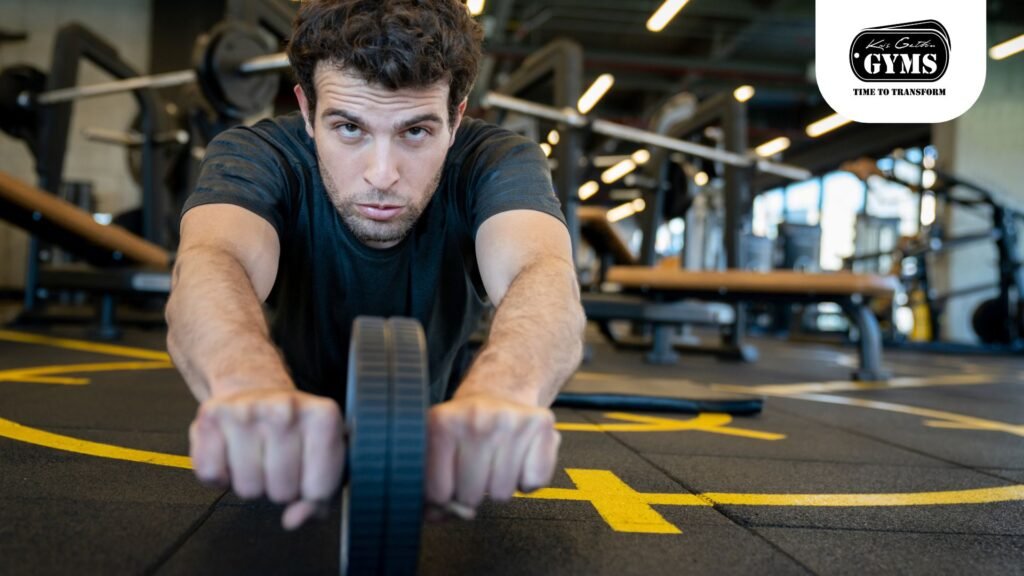
Place a mat beneath the knees for cushioning, since nearly all body weight rests there throughout the movement. Hold the ab wheel with both hands, positioned under the shoulders. Tighten the abs, squeeze the glutes, and gently tuck the pelvis to prevent the lower back from arching, then slowly roll the wheel forward.
Reaching maximum distance isn’t the goal here, and chasing it too early is exactly how form breaks down. Stop the moment control genuinely starts slipping, pause briefly, then draw the wheel back by contracting the abs, not by pushing off the floor with the arms. Breathing steadily throughout matters more than most beginners initially realize.
A few things worth remembering: rolling the farthest distance possible was never the point. This isn’t an arm workout, the core should genuinely be doing the work. And it’s never a reason to let the lower back arch under the strain.
Angled Rollout : Bringing The Obliques Into Play
Targets : abs, TVA, obliques, shoulders, lats
Angled rollouts progress naturally from the kneeling version. Starting in the same kneeling position, the wheel tilts slightly toward one side. Brace the core as if preparing for a gentle punch, then roll diagonally while maintaining real tension through the glutes and obliques. Return to center before repeating on the opposite side.
Genuine mastery here shows up when every diagonal roll happens without the hips shifting or twisting. Only once that control is consistent should progression move toward tougher variations.
Worth keeping in mind: use a short range of motion initially. The goal is genuinely feeling the oblique muscles working, not just going through the motion. This isn’t a twisting exercise, it’s a controlled diagonal roll. Moving slowly enough to stay balanced matters more than speed, and the lower back should stay comfortable throughout, never strained.
Standing Rollout : The Genuine Advanced Challenge
Targets : abs, TVA, deep core, hip flexors, obliques, shoulders, lats
No knees on the ground, no shortcuts, this is where the exercise becomes genuinely demanding. Standing rollouts belong in the advanced category and should only be attempted once kneeling and angled variations feel genuinely controlled.
Stand with feet roughly hip-width apart, wheel on the floor in front. Hinge at the hips, brace the core, and roll forward with real control, keeping the ribs pulled down and the back stable as the body lengthens. Extend only as far as the hips can be prevented from dropping and the spine from overextending, then use the abs and lats to guide the wheel back. If a full repetition proves too difficult initially, practicing slow roll-downs alone is a genuinely reasonable regression.
This variation is seriously demanding, and stopping immediately at any sharp or persistent pain isn’t optional, it’s a hard rule. Distance was never the goal here either. This is genuinely not a beginner-friendly variation, and performing it with momentum rather than control carries real injury risk.
Weighted Rollout : Adding Load Only Once The Basics Are Solid
Targets : abs, deep core, obliques, shoulders, arms, lats
Weighted resistance belongs in the program only after regular kneeling rollouts feel genuinely controlled and completely pain-free. A weighted vest or plate adds the load, worn into the usual kneeling setup on a non-slip mat.
The extra load makes the core work considerably harder, which means shortening the rollout distance and slowing the tempo, rather than sacrificing posture to chase the same range achieved without weight. Abs stay braced, glutes engaged, pelvis controlled as the wheel travels forward, pausing at the strongest achievable position before returning without any jerking or lower back dip.
Mastering bodyweight rollouts first is genuinely non-negotiable before adding weight. Loading up doesn’t automatically make the exercise more effective if the core isn’t genuinely engaged throughout, it just adds risk without adding benefit. And this variation, like all ab wheel work, was never a replacement for proper nutrition and full-body training, it’s a supplement to both, not a substitute.
Building A Workout Around This : The Ab Wheel Routine For A Stronger Core
Spot reduction, the idea that ab exercises alone burn fat specifically from the belly, is a genuine myth worth dropping entirely. Reducing visible belly fat actually comes from strengthening the entire core consistently while maintaining a genuine calorie deficit and paying real attention to portion control, ab work and fat loss are related but distinct processes.
A solid structure worth following two to three times weekly:
| Exercise | Sets × Reps | Rest |
|---|
| Kneeling ab wheel rollouts | 3 × 10 | 60–90 sec |
| Kneeling rollout hold | 3 × 15 (20 sec hold) | 60 sec |
| Plank | 3 × 30 (45 sec hold) | 45–60 sec |
If the hips drop or the back feels strained at any point during this routine, stopping and repositioning, or simply resting a moment, matters more than pushing through for the sake of completing a set.
A quick checklist worth internalizing: kneel with the ab wheel positioned under the shoulders. Brace the abs and squeeze the glutes before initiating any movement. Perform forward rolls slowly, without letting the back arch.
And roll back by engaging the core deliberately, never by simply pushing with the arms.
Why This Progression Matters More Than Rushing To The Advanced Version
One thing coaches at KRIS GETHIN GYMS see consistently with members eager to progress quickly : skipping straight to standing rollouts before kneeling variations are genuinely mastered is one of the fastest ways to compromise form and risk real injury, all for a version of the exercise that looks more impressive without actually building more usable strength.
The kneeling rollout, done with genuine control and full range within what the core can actually manage, builds the exact foundation every harder variation depends on. Rushing that progression doesn’t accelerate results, it just increases risk while the actual strength gain lags behind.