Walk the floor with a client in their sixties or seventies, and you notice something most people never think about until they’re the one experiencing it.
The equipment that worked fine at thirty suddenly feels risky, not because strength disappeared overnight, but because joints, bones, and balance all quietly changed how much load they can absorb safely.
That shift doesn’t mean training stops mattering. If anything, it matters more.
Aging brings a predictable set of physical challenges, bone density decline, muscular atrophy, reduced joint stability, all of which make daily activities like climbing stairs or carrying groceries progressively harder without intervention.
But the research here is consistent and encouraging: regular exercise slows that decline meaningfully, improving mobility, balance, and independence well into later decades.
The real question isn’t whether older adults should train. It’s which equipment lets them train hard enough to matter without introducing unnecessary risk.
Why Equipment Choice Matters More With Age
Every workout creates small amounts of controlled damage to muscle and joint tissue, and it’s the repair process afterward that builds strength. That principle doesn’t change with age. What changes is the margin for error.
Aging joints, tendons, and muscles carry more accumulated wear, which means the line between productive training stress and actual injury sits closer together than it did decades earlier.
This is exactly why the right equipment matters so much for older lifters.
Machines built with proper support and controlled movement paths let someone train with real intensity while keeping that risk in check, something free-weight training alone often can’t offer as safely for someone managing joint sensitivity or balance concerns.
Best Equipment For Cardiovascular Fitness
Treadmill. Still one of the most accessible ways to build cardiovascular endurance, with full control over pace and incline, plus safety features like handrails and emergency stops built into most commercial units. Walking indoors at a controlled speed remains one of the safest cardio entry points for someone easing back into regular training.
Elliptical or Cross Trainer. This machine replicates the running motion without the repeated joint impact, since the feet stay planted on the pedals throughout. Add in the arm involvement for a full-body element, and it delivers meaningful cardiovascular benefit without the knee, hip, or lower back stress that running on pavement can create.
Recumbent Exercise Bike. The reclined seating position with full back support makes this one of the most joint-friendly cardio options available, particularly valuable for anyone managing balance concerns or lower back sensitivity. It delivers the same cardiovascular and leg-strengthening benefit as standard cycling, just without the stress on the joints or the balance demand of an upright bike.
Rowing Machine. A genuinely full-body option that trains cardiovascular capacity and strength simultaneously, with resistance and pace fully adjustable. Because it’s non-weight-bearing, it places minimal stress on the joints while still delivering a serious training stimulus when the intensity is dialed up appropriately.
Best Equipment For Strength And Resistance
Resistance Bands. Inexpensive, portable, and genuinely effective for building functional strength with minimal injury risk, which is exactly why they’re commonly used in rehabilitation settings. A single set can target most major muscle groups, making them one of the most accessible tools for maintaining independence in daily movement, no gym membership required.
Stability Ball. Sitting or leaning on an unstable surface forces multiple muscle groups to engage simultaneously just to maintain position, which makes this a genuinely effective tool for building core strength and balance together. For older adults specifically, balance training matters as much as strength training in reducing fall risk.
Seated Back Row. Performed entirely seated, this machine strengthens the upper back and shoulders while removing any balance demand from the equation. Strengthening this area directly supports better posture, something that becomes increasingly relevant as postural muscles weaken with age.
TRX Suspension Trainer. Using bodyweight and gravity as resistance through adjustable straps, TRX movements like the row scale easily to different strength levels. It’s a low-impact way to build genuine upper-body strength without loading the joints the way a heavy barbell movement would.
Lateral Pull-Down Machine. The seated position provides back support while targeting the upper back, shoulders, and arms, reducing strain on the lower back that a standing pulling movement might otherwise create. Stronger back and shoulder muscles translate directly into better posture and reduced shoulder injury risk.
Exercise or Yoga Mat. Simple, inexpensive, and genuinely useful, a mat opens the door to core work, stretching, and floor-based mobility training. A stable, strong core supports the spine directly, which matters considerably for reducing back pain and maintaining functional movement quality.
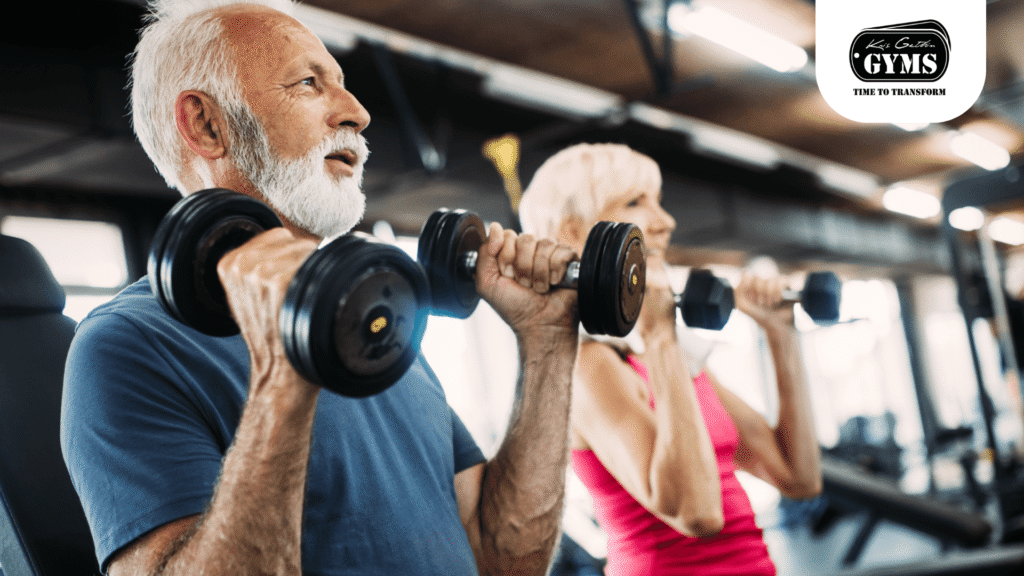
Light Dumbbells. Small, adjustable, and ideal for anyone returning to strength training after years away from it. Progressive dumbbell work helps prevent muscle loss, supports bone density, and builds the functional strength needed for everyday tasks like carrying groceries or lifting a grandchild.
Seated Shoulder Press Machine. Fully seated and supported, this machine builds shoulder and upper-arm strength through a controlled path of motion, useful for maintaining the ability to lift and reach safely, both essential for genuine day-to-day independence.
Leg Curl Machine. Hamstring strength plays a direct role in balance and fall prevention, and this machine trains that muscle group without placing stress on the knees or hips the way many free-weight hamstring exercises would.
Leg Extension Machine. Targeting the quadriceps directly, this machine builds strength that carries over into everyday movements like climbing stairs or standing up from a chair, both meaningful indicators of functional independence in older adults.
Leg Press. Essentially a seated squat pattern, the leg press trains the quads, hamstrings, glutes, and calves together while offering far more stability than a standing squat. For anyone managing balance concerns, this becomes one of the more accessible ways to still train the entire lower body seriously.
Bicep Curl Machine. A controlled, guided path for arm strength that removes the form and joint-strain risk that can come with free-weight curls performed with fatigue or poor technique. Maintaining arm strength supports the ability to lift and carry objects safely well into later years.
Reading The Body’s Signals Matters More Than The Equipment Itself
None of this equipment works in isolation from how it’s actually used. The value of a supported, guided movement path is that it reduces risk, not that it eliminates the need for proper form and appropriate loading.
One thing coaches notice repeatedly with older clients specifically: progress here looks different than it does for a twenty-five-year-old chasing a new personal best. Consistency, gradual load increases, and genuine attention to how joints respond week to week matter far more than pushing intensity for its own sake.
This is the same recovery-first philosophy woven through everything at KRIS GETHIN GYMS, training hard enough to build real strength, while respecting that the body’s capacity to absorb and recover from stress changes with age, not disappears.
Why This Category Of Training Deserves More Attention
The physical case for this kind of training is well established, better joint function, preserved muscle mass and bone density, improved balance and mobility.
The less discussed benefit sits in cognitive health, since regular physical activity has been linked to better memory, concentration, and overall mental sharpness in older adults, alongside a documented reduction in the risk of chronic conditions like heart disease and dementia.
None of that requires an intimidating gym floor or advanced programming. It requires the right equipment, used consistently, with appropriate guidance from someone who understands how training needs shift with age.
That combination is what actually keeps people independent, mobile, and strong well into the decades where most people assume decline is inevitable.