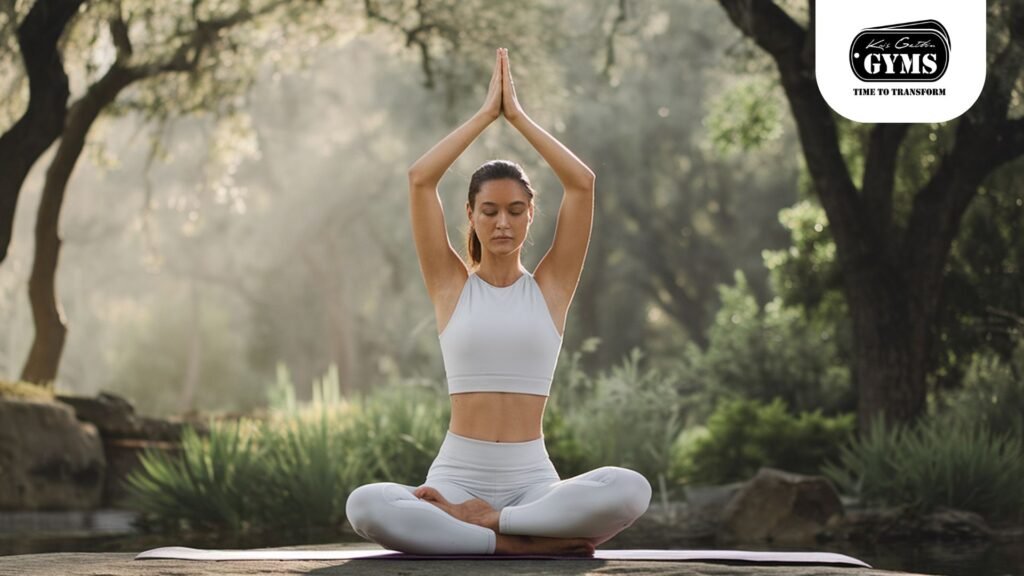
Stress has a physical address in the body, and for most people it lives in exactly the same three places every time. The neck. The shoulders. The lower back.
That’s not a coincidence. Chronic tension quietly tightens these areas over weeks of sitting, stress, and repetitive movement, and most people never connect the dots between a stiff neck and a stressful month at work.
Yoga addresses both problems simultaneously, slow, deliberate stretching releases the physical tension itself, while the deep breathing built into every pose calms the nervous system driving that tension in the first place.
Nobody needs to already be flexible to start. Flexibility is exactly what develops naturally through consistent, gentle practice, not a prerequisite for beginning.
Why This Combination Actually Works
The link between stress and physical tightness runs in both directions. A stressed nervous system holds muscles tense without conscious effort, and tense muscles, left unaddressed, feed back into a heightened stress state.
Breaking that cycle doesn’t require an intense workout. It requires slow, controlled movement paired with genuinely deep breathing, exactly what these five poses are built around.
1. Child’s Pose (Balasana)
A genuinely restful pose that gently stretches the hips, thighs, and lower back simultaneously.
How to do it : Kneel on the floor and sit back onto the heels. Stretch the arms forward and lower the chest toward the ground. Rest the forehead on the mat and breathe slowly throughout. Hold for 30 seconds to a minute.
This pose calms the mind directly while relieving real tension in the back, making it a natural starting point for anyone genuinely new to yoga or coming to a mat specifically to decompress after a stressful day.
2. Cat-Cow Pose (Marjaryasana-Bitilasana)
A gentle, flowing movement that warms the spine and releases genuine stiffness built up from hours of sitting.
How to do it : Start on hands and knees. Inhale, dropping the belly while lifting the chest and tailbone into Cow pose. Exhale, rounding the spine and tucking the chin into Cat pose. Repeat slowly for 8 to 10 rounds.
This flow genuinely improves spinal flexibility while easing the back tension that accumulates from long stretches at a desk, something particularly relevant for anyone spending most of their day seated.
3. Standing Forward Fold (Uttanasana)
This pose stretches the hamstrings while calming the nervous system directly, since bringing the head below the heart triggers a genuine physiological relaxation response.
How to do it : Stand with feet hip-width apart. Slowly bend forward from the hips, letting the head hang naturally. Keep a slight bend in the knees if the hamstrings feel tight. Hold for 30 to 60 seconds.
This pose genuinely reduces anxiety while stretching the back of the legs, a useful combination for anyone carrying both physical and mental tension simultaneously.
4. Legs-Up-The-Wall Pose (Viparita Karani)
A deeply relaxing pose commonly used to relieve tired legs and genuinely reduce overall stress.
How to do it : Sit sideways next to a wall. Swing the legs up the wall while lying back. Rest the arms by the sides and close the eyes. Stay in this position for 5 to 10 minutes.
This pose works particularly well as a calming ritual before sleep, given how long it’s held and how little active effort it requires, making it accessible even at the end of a genuinely exhausting day.
5. Downward-Facing Dog (Adho Mukha Svanasana)
A full-body stretch that builds real strength and flexibility across the shoulders, hamstrings, and calves simultaneously.
How to do it : Start on hands and knees. Lift the hips up and back, forming an inverted V-shape. Keep hands shoulder-width apart and heels reaching toward the floor. Hold for 30 seconds, breathing steadily throughout.
This pose genuinely boosts circulation while easing tension throughout the entire body, making it a strong finishing pose after working through the others.
Tips For Beginners
Practicing on an empty stomach, or a few hours after eating, avoids the discomfort that comes with certain forward folds and inversions on a full stomach.
Moving slowly and never forcing a stretch matters more than most beginners initially expect, flexibility genuinely builds over weeks of consistent practice, not through pushing hard in a single session.
Focusing on even, steady breathing throughout each pose is what actually drives the stress-relief benefit, not just the stretch itself.
And consistency matters considerably more than intensity here, a short daily practice consistently outperforms an occasional intense session.
Why This Belongs In A Complete Training Program
One thing our coaches at KRIS GETHIN GYMS see consistently with clients chasing serious strength or performance goals : recovery work like this gets treated as optional far too often, when it’s genuinely foundational to training well over the long term.
Chronic tension in the neck, shoulders, and lower back doesn’t just affect comfort, it directly limits mobility and movement quality during heavier training sessions elsewhere in the week.
A short, consistent yoga practice complements structured strength and cardio work rather than competing with it, addressing exactly the recovery and mobility gap that pure strength training alone can’t fill.
Ten to fifteen minutes daily is genuinely enough to notice a real difference in how the body and mind feel over time. No advanced training required, no prior flexibility needed, just consistent, gentle practice.