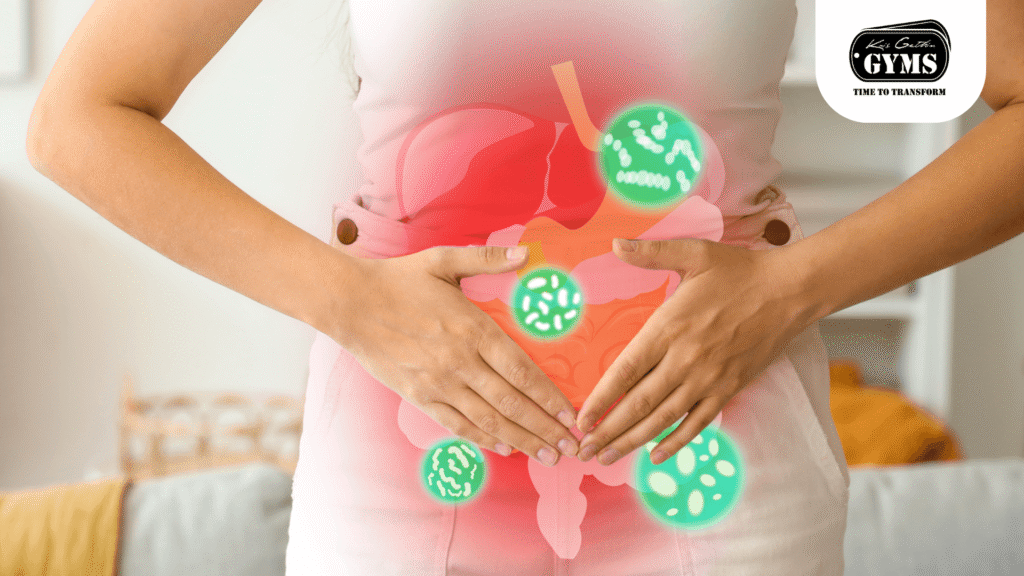
Scroll through fitness content for five minutes and gut health shows up everywhere, prebiotics, probiotics, powders promising to “fix” a microbiome most people couldn’t actually describe if asked to.
Buried under all that noise sits a simpler, more useful question. How does anyone actually know if their gut is doing well, without buying a single supplement or running an expensive test? Dr Karan Rajan, an NHS surgeon, recently laid out five straightforward, observable signs worth paying attention to, the kind of thing you can genuinely notice at home rather than infer from marketing copy on a supplement label.
You Don’t Get Sick Very Often
One of the clearest signals of good gut health is, quite simply, the absence of frequent illness. According to Dr Rajan, getting sick less than once every three months on average is a solid indicator that the gut-immune axis is functioning well.
The reason this connection exists is worth understanding properly. Roughly 70% of the immune system actually lives in the gut, with immune cells constantly sampling whatever’s passing through the digestive tract, responding to both pathogens and beneficial molecules as they move through.
When the balance of beneficial gut bacteria gets disrupted, a state referred to as gut dysbiosis, the signals these immune cells send skew toward “danger” mode, driving up inflammation and genuinely increasing susceptibility to infection.
Dr Rajan is careful to frame the three-month window as a useful rule of thumb rather than a rigid rule, everyone catches something occasionally, and one cold doesn’t signal a failing gut. But a consistent pattern of frequent illness is worth paying real attention to as a broader signal.
You Can Try New Foods Without Your Gut Punishing You For It
A second sign involves how the digestive system responds when it encounters something unfamiliar, a new cuisine, an unusual ingredient, a meal genuinely outside the normal rotation.
Being able to eat a wide variety of foods, whether traveling or simply trying something new at home, without stomach discomfort following, is a genuinely good sign.
Dr Rajan explains the underlying logic directly : tolerating a wide diversity of foods reflects a similarly diverse gut microbiome underneath.
A more varied population of gut bacteria is generally better equipped to break down and process a broader range of food types, which is exactly why someone with a genuinely healthy gut can handle dietary variety without the bloating, discomfort, or digestive upset that a less resilient gut tends to produce when pushed outside its usual pattern.
Why This Framework Matters More Than Another Supplement Claim
What makes this particular approach genuinely useful is that it doesn’t require buying anything or interpreting a complicated lab result. These are observable patterns, how often illness shows up, how the body responds to dietary variety, both of which anyone can honestly assess about their own recent months without guesswork.
This lines up with how nutrition guidance should actually work at KRIS GETHIN GYMS, focused on real, observable indicators of how a body is functioning rather than chasing whichever supplement trend is currently dominating a feed.
Gut health genuinely connects to training performance too, an immune system running efficiently means fewer missed training days from illness, and a gut tolerating dietary variety well means more flexibility in building a nutrition plan that actually fits real life, travel, social meals, and all, rather than a rigid, restrictive template that falls apart the moment circumstances change.
What To Actually Do With This Information
Neither of these signs demands a dramatic intervention on their own. If illness has been showing up more frequently than every few months, or if certain foods reliably trigger discomfort, that’s genuinely worth paying attention to and potentially discussing with a doctor, rather than immediately reaching for a probiotic supplement as the default fix.
Supporting gut health in a genuinely sustainable way tends to come down to fundamentals that get less attention than trending supplements, a diverse, fiber-rich diet, adequate hydration, consistent sleep, and managed stress, all of which influence the gut microbiome considerably more than any single product marketed as a quick fix.