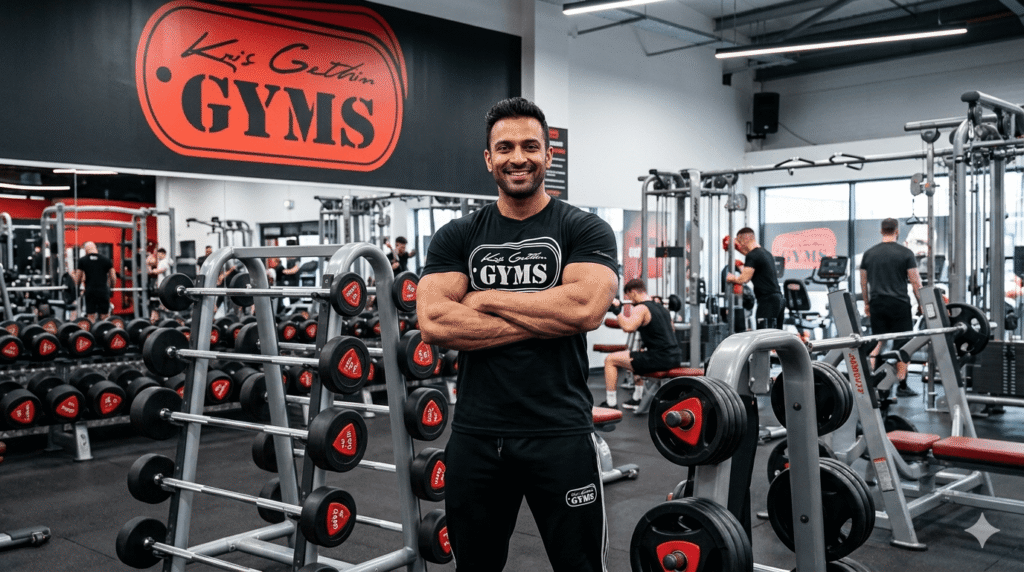
If you talk to trainers who’ve switched gyms in the last couple of years, there’s a pattern you’ll start noticing.
A lot of them are moving toward places where they’re not just working… they’re actually growing.
And that’s where Kris Gethin Gyms has been quietly building a strong pull.
It’s not just branding. It’s not just a celebrity association.
There’s something deeper going on that’s making trainers choose this ecosystem over more traditional gym setups.
It Starts With One Simple Shift : Trainers Want to Learn, Not Just Earn
Earlier, most trainers joined gyms for floor access, clients, and basic income stability.
Now, that’s not enough.
Good trainers want :
- Better coaching systems
- Smarter programming methods
- Real transformation results they can stand behind
Because the market has changed.
Clients today are more aware. They ask questions. They expect results.
And if a trainer isn’t evolving, they get left behind very quickly.
The Education System Feels Different Here
One of the biggest reasons trainers lean toward Kris Gethin Gyms is the learning environment.
This isn’t a place where you just get a certification and start training people.
This isn’t a place where you just get a basic certification and start training clients blindly.
There’s a deeper layer to it.
Through Physique Global, trainers are exposed to structured education, advanced certifications, and real transformation methodologies. This platform was specifically built to educate and upskill personal trainers, not just certify them on paper.
So instead of learning random workouts from the internet, trainers here get:
- Access to globally recognized training systems
- Exposure to methods like DTP (Dramatic Transformation Principle)
- Workshops, seminars, and continuous learning opportunities
And that changes everything.
Because now, a trainer isn’t just “experienced”—they’re system-trained.
It’s Not Random Training. It’s System-Driven Coaching
Spend enough time in the fitness industry, and you’ll realize something :
A lot of gyms still run on outdated or inconsistent training approaches.
Different trainers. Different advice. No real system.
What stands out here is the consistency.
There’s a clear philosophy :
- Training isn’t random
- Progress is measurable
- Programs are structured
For trainers, that’s a big advantage.
It removes confusion and replaces it with clarity.
The Equipment Actually Supports Better Coaching
This might sound like a small thing – but it isn’t.
Most trainers have worked in gyms where :
- Machines feel off
- Movement patterns aren’t smooth
- Clients struggle with form
That makes coaching harder.
In a setup where equipment is designed with proper biomechanics in mind, everything changes :
- Movements feel natural
- Injury risk goes down
- Trainers can focus on technique instead of adjustments
It creates a more professional working environment overall.
Trainers Attract Better Clients (And That Changes Everything)
Here’s something not many people talk about.
The type of client a gym attracts directly impacts a trainer’s growth.
In premium or transformation-focused gyms :
- Clients are more serious
- They commit longer
- They follow plans properly
That means :
- Better results
- Better testimonials
- Better retention
And for a trainer, that’s how your career compounds.
There’s a Clear Career Path (Which Is Rare in This Industry)
One of the biggest frustrations trainers face is stagnation.
Same routine. Same clients. No growth.
What’s different here is the structure.
There’s a visible path :
It’s not overnight success – but it’s not random either.
And that predictability matters when you’re thinking long-term.
The Culture Feels More Disciplined
Every gym has equipment.
But not every gym has culture.
In many places, the environment becomes casual very quickly :
- Trainers lose structure
- Clients lose seriousness
- Results become inconsistent
A more disciplined setup changes that.
You’re surrounded by :
- Trainers who take their work seriously
- Clients who are focused
- Systems that demand consistency
That environment pushes you to level up, whether you plan to or not.
Increasing Opportunities for Female Trainers
Another shift that’s becoming noticeable is the push toward better inclusion.
More gyms are trying to bring in female trainers – but not all succeed in creating the right environment.
Here, there’s a visible effort to :
- Build a more balanced trainer base
- Create better opportunities
- Support long-term growth
And that’s important – not just for diversity, but for the overall quality of coaching.
It’s Not Perfect (And That’s Important to Acknowledge)
No brand is flawless.
Some trainers have pointed out that :
- Compensation can vary by location
- Management experience differs across branches
And that’s normal when a brand is expanding.
But despite that, many still choose to stay – or move in – because of the long-term upside in learning and exposure.
The Bigger Shift : Trainers Are Thinking Like Professionals
This is the real reason behind the trend.
Trainers are no longer just looking for : “Where can I get more clients?”
They’re asking : “Where can I become better?”
And that’s a completely different mindset.
When you combine :
- Structured education
- Better systems
- Serious clients
- Growth opportunities
…it naturally becomes a preferred choice.
Final Thoughts
Kris Gethin Gyms isn’t attracting gym trainers just because of branding.
It’s attracting them because it aligns with where the fitness industry is heading.
More structure. More science. More accountability.
For trainers who want to build a serious career – not just survive month to month – that combination is hard to ignore.