I remember a conversation with a new member who had just joined the gym.
He looked completely serious and asked, “If I stop eating carbs, will I lose fat faster?”
Before I could answer, he added another line.
“I’m eating only chicken and salad now.”
That moment pretty much sums up the confusion people have about nutrition.
Somewhere along the way, many people started believing that one nutrient builds muscle, another one causes fat gain, and another should be avoided completely.
But the body doesn’t work like that.
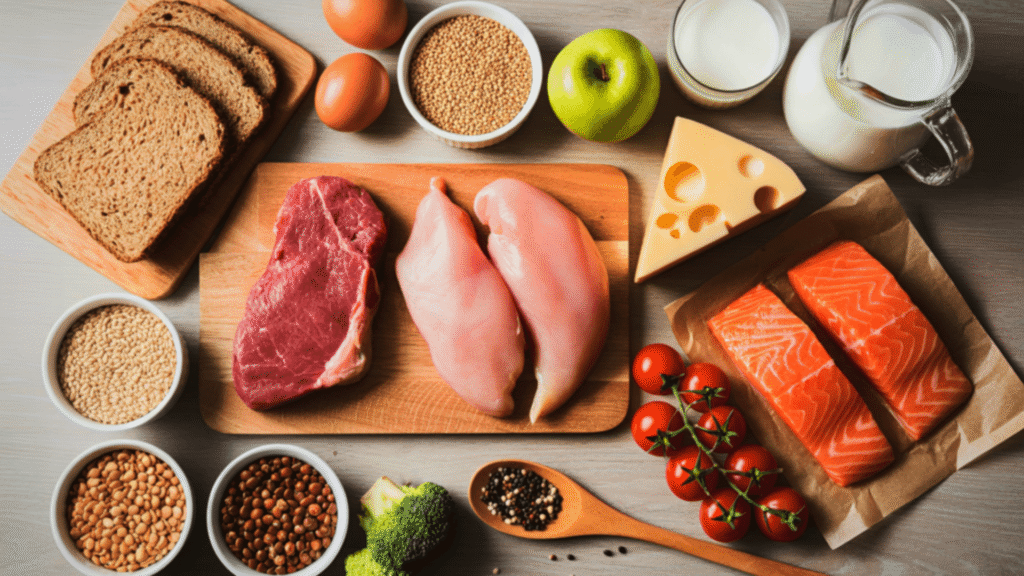
Every day, your body depends on three major nutrients to function properly: protein, carbohydrates, and fats.
These are called macro nutrients simply because the body needs them in larger quantities compared to vitamins or minerals.
Remove any one of them completely, and things usually start going wrong – energy drops, workouts suffer, and recovery slows down.
When people understand what each of these nutrients actually does, nutrition suddenly becomes much simpler.
Table of Contents
ToggleProtein : The Body’s Repair Material
Anyone who trains regularly hears about protein almost immediately.
There’s a reason for that.
Every workout places stress on your muscles. When you lift weights, run, or push through an intense training session, your muscle fibers experience small amounts of damage. It’s not something to worry about – that’s actually how muscles adapt and become stronger.
But the body needs raw material to repair that damage.
Protein provides that material.
Inside the body, protein breaks down into amino acids. These amino acids are used to rebuild muscle tissue, support the immune system, produce enzymes, and maintain many other functions that happen quietly in the background.
Protein also has another advantage people notice quickly – it keeps you full for longer. A meal that contains enough protein tends to satisfy hunger better than a meal built mostly around refined carbohydrates.
That’s one reason many people find it easier to manage their diet when protein intake improves.
In everyday life, protein usually comes from foods like :
- Eggs
- Chicken and fish
- Paneer and dairy products
- Lentils and beans
- Nuts and seeds
- Whey protein supplements
Someone who trains regularly will typically need more protein than someone who is inactive. The exact amount varies, but active individuals often aim somewhere around 1.2 to 2 grams per kilogram of body weight.
Carbohydrates : The Body’s Energy System
Carbohydrates probably have the most misunderstood reputation in modern dieting.
For years, many diet trends painted carbs as the villain. People started believing that avoiding carbohydrates completely was the fastest way to lose weight.
But if you’ve ever tried training hard while eating very little carbs, you probably noticed something quickly – workouts feel much harder.
That’s because carbohydrates are the body’s primary source of fuel.
Once eaten, carbs are broken down into glucose. That glucose enters the bloodstream and becomes immediate energy for the brain and muscles.
Some of that energy gets stored in the muscles and liver as glycogen. During workouts – especially strength training or high-intensity exercise – the body taps into those glycogen stores to keep you moving.
When glycogen levels are too low, fatigue shows up faster and performance drops.
Not all carbohydrates behave the same way though.
Some digest quickly and provide rapid energy, while others digest more slowly and release energy gradually throughout the day.
Carbohydrates are commonly found in foods like :
- Rice
- Oats
- Fruits
- Whole grains
- Potatoes
- Beans and legumes
For people who train consistently, carbohydrates are not something to fear. In many cases, they are exactly what allows workouts to stay strong and productive.
Fats : The Nutrient That Was Misjudged
For a long time, fats carried a bad reputation.
Many people believed that eating fat would automatically lead to weight gain. But nutrition science eventually corrected that idea.
Fats actually play several essential roles in the body.
They help produce hormones, support brain function, protect organs, and allow the body to absorb certain vitamins. Vitamins A, D, E, and K, for example, can’t be properly absorbed without dietary fat.
Fats also provide long-lasting energy. Compared to carbohydrates and protein, fat contains more than double the calories per gram, which makes it an efficient energy reserve.
Of course, the type of fat matters.
Healthier fats usually come from foods such as :
- Nuts and seeds
- Olive oil
- Avocados
- Fatty fish
- Natural nut butters
Highly processed trans fats – often found in fried or heavily processed foods – are the ones that should be limited.
When consumed in balanced amounts, healthy fats support hormone balance, which has a direct influence on metabolism, recovery, and overall health.
Why Cutting Out Nutrients Usually Backfires
Nutrition trends change every few years.
At one point low-fat diets were everywhere. Then low-carb diets became popular. Now high-protein diets dominate many fitness conversations.
But when you look at how the body actually functions, it becomes clear that all three macro nutrients play different roles.
Carbohydrates provide quick energy.
Protein repairs and rebuilds tissue.
Fats support hormones and nutrient absorption.
When these nutrients work together, the body performs better.
Energy levels stay stable, workouts feel stronger, and recovery becomes easier.
For general fitness and health, a balanced diet often ends up somewhere around :
- Protein : 25–35% of daily calories
- Carbohydrates : 40–50%
- Fats : 20–30%
These numbers can change depending on goals, but the overall idea remains the same.
Balance usually works better than extreme restriction.
Final Thoughts
The biggest mistake people make with nutrition is turning food into a list of enemies.
Carbohydrates aren’t automatically bad.
Fats aren’t automatically fattening.
Protein alone doesn’t build muscle without the support of the other nutrients.
The body runs best when protein, carbohydrates, and fats are all present in the right proportions.
Instead of chasing extreme diet trends, focusing on balanced meals, consistent training, and long-term habits usually leads to better results.
And most importantly – it’s a lot easier to maintain.
People Also Ask
Both nutrients serve different purposes. Protein supports muscle repair, while carbohydrates provide the energy needed to perform workouts.
Yes. Weight loss mainly depends on overall calorie balance, not the complete removal of carbohydrates.
No. Healthy fats actually support hormone function, which plays a role in regulating metabolism.
For most active individuals, intake usually ranges between 1.2 and 2 grams of protein per kilogram of body weight.
No. Healthy fats should still be included in moderate amounts because they support hormone balance and nutrient absorption.