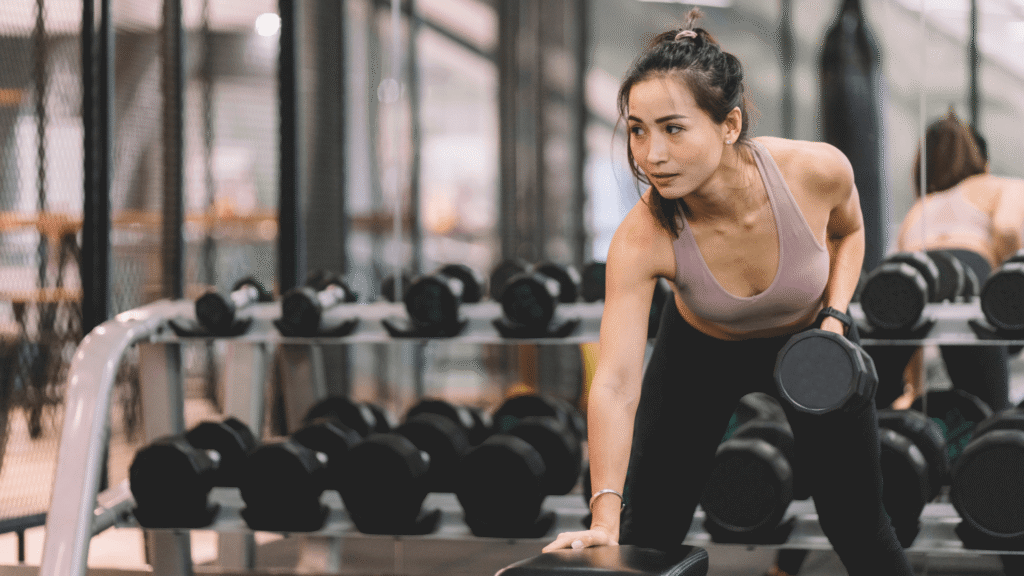
Whenever a new female client walks up to me and says, “Rahul, I want to tone up, not become bulky,” I already know what’s holding her back.
Most women have been fed the wrong ideas about strength training for years – that lifting heavy will make them “look like a bodybuilder,” or that women build muscle differently from men.
Here’s the truth I always tell them : you’re not going to wake up bulky unless you’ve trained, eaten, and pushed like an athlete for years.
Building muscle as a woman takes effort, consistency, and the right plan – not fear.
This guide will help you understand exactly how your body responds to training and what you need to do to build lean, strong, visibly sculpted muscle.
Everything here is from real experience – the conversations I’ve had in the gym, the mistakes I’ve seen, and the practical steps that actually work.
Table of Contents
ToggleFirst Understand How Women Build Muscle
Most women think their body “doesn’t respond” to training.
That’s not true. The real issue is that their workouts are usually designed to burn calories, not build muscle.
Here’s what matters :
- Hormones are different, not weaker.
Yes, women have lower testosterone, but you still have enough of it — along with estrogen — to support serious muscle growth. - Women recover better than men.
This surprises many people, but in most cases, women can handle more training volume and recover faster. - You gain lean muscle slowly but consistently.
You won’t put on 5 kg of muscle in two months. But the visual change — toned arms, defined back, sculpted legs — shows up faster than you think.
The Real Reason Most Women Don’t See Results
I’ve trained enough women to spot the pattern instantly. The common issues are:
- Too many “fat-burning” workouts
- Too little protein
- Lifting weights that are too light
- No progression (same exercises, same reps, same dumbbells)
- Fear of weights
- Over-reliance on cardio
Muscle doesn’t grow from doing 40 minutes of random circuits.It grows from progressive strength training, smart nutrition, and recovery.
The 4-Step Framework I Give to Every Woman Who Wants to Build Muscle
Below is the exact structure I use before designing any woman’s training plan. Follow these four steps, and your body will respond – it has no option.
Step 1 : Strength Training Is Non-Negotiable
Muscle is built through resistance training, not high-intensity cardio, not detox diets, not a hundred reps with tiny pink dumbbells.
The most important movements are:
- Squat
- Deadlift (or hip hinge variations)
- Push (bench or dumbbell press)
- Pull (rows, lat pulldowns)
- Lunge
- Overhead press
These movements activate multiple muscles at once, helping you build shape and strength together.
Start with 2-3 sessions per week, then move up to 3-4
Step 2 : Lift Weights That Actually Challenge You
If you can talk comfortably through a set, the weight is too light.
A good guideline Rahul gives every beginner:
- Pick a weight where the last 2-3 reps feel difficult, but your form stays clean.
- Increase weight or reps every 1-2 weeks.
- Track your lifts. Don’t guess.
Women often underestimate how strong they really are. The moment you stop lifting like you’re fragile, your body starts changing.
Step 3 : Eat Enough to Build Muscle
You can’t build muscle if you’re barely eating. Your body isn’t going to grow new muscle tissue when it’s operating in survival mode.
Here’s the basic nutrition formula:
Protein :
Aim for 1.2 — 1.6g per kg of bodyweight.
Paneer, eggs, chicken, dal, tofu, Greek yogurt — whatever fits your routine.
Carbs :
Don’t fear them. Carbs fuel your workouts and help recovery.
Rice, roti, fruits, oats, potatoes — all valid.
Fats :
Healthy fats support hormones.
Include nuts, seeds, olive oil, eggs, avocados.
Consistency matters more than perfection.
Don’t follow extreme diets. Don’t cut carbs randomly.
Eat enough to train well, recover well, and sleep well.
Step 4 : Allow the Body to Recover
Women, especially beginners, push too hard without rest.
Muscle doesn’t grow while working out — it grows during recovery.
Non-negotiables :
- 7+ hours of sleep
- 1–2 rest days per week
- Hydration
- Managing stress
- Taking deload weeks when needed
Recovery isn’t laziness; it’s strategy.
Muscle-Building Workout for Women
Here’s a simple routine I actually use with new clients. Nothing fancy – effective, safe, and progressive.
Day 1 – Lower Body & Glutes
- Goblet Squat – 3 x 10
- Hip Thrust – 3 x 12
- Leg Press – 3 x 10
- Romanian Deadlift (Dumbbell) – 3 x 10
- Glute Bridge – 2 x 15
Day 2 – Upper Body Strength
- Dumbbell Bench Press – 3 x 10
- Seated Row – 3 x 10
- Lat Pulldown – 3 x 10
- Dumbbell Shoulder Press – 2 x 12
- Bicep Curls – 2 x 12
- Triceps Rope Pushdown – 2 x 12
Day 3 – Full Body
- Split Squats – 3 x 8 each leg
- Dumbbell Deadlift – 3 x 10
- Machine Chest Press – 3 x 10
- Back Extension – 2 x 12
- Plank – 30 seconds
Start here. Get stronger week by week. When the weights feel lighter, increase them.
What NOT to Do When Trying to Build Muscle
Rahul sees these mistakes all the time :
- Doing endless cardio
- Training abs daily hoping for a flat stomach
- Changing workouts every three days
- Eating too little protein
- Following celebrity diets
- Fearing carbs
- Avoiding weights because of “bulking” myths
Replace fear with knowledge. Replace shortcuts with consistency.
How Long Does It Take for Women to See Muscle Growth?
Realistically :
- In 4-6 weeks : strength increases
- In 8-12 weeks : visible shape changes
- In 6 months : clear muscle definition
- In 12 months : a completely transformed physique
This is not a quick-fix journey. But every month your body upgrades – silently, steadily, undeniably.
Final Thoughts
Building muscle as a woman isn’t about turning yourself into someone you’re not.
It’s about becoming the strongest, most confident version of yourself.
Train with purpose. Eat like your goals matter. Stop holding back because of outdated myths.
When you approach the gym with that mindset, results don’t just “show up” — they accelerate.
If you want, I can now write the next article in Rahul’s voice with the same 100% human tone.
People Also Ask
No. You don’t have the hormonal profile for extreme bulk. You’ll become toned, tight, and strong.
Yes. The principles are the same; the volume and progression can be adjusted.
Not mandatory. Useful if your diet lacks protein. The source doesn’t matter; total intake does.
Yes, but keep it moderate, 2-3 short sessions weekly. Don’t overdo it.
Absolutely. Age affects speed, not possibility. Strength training actually becomes more important later.