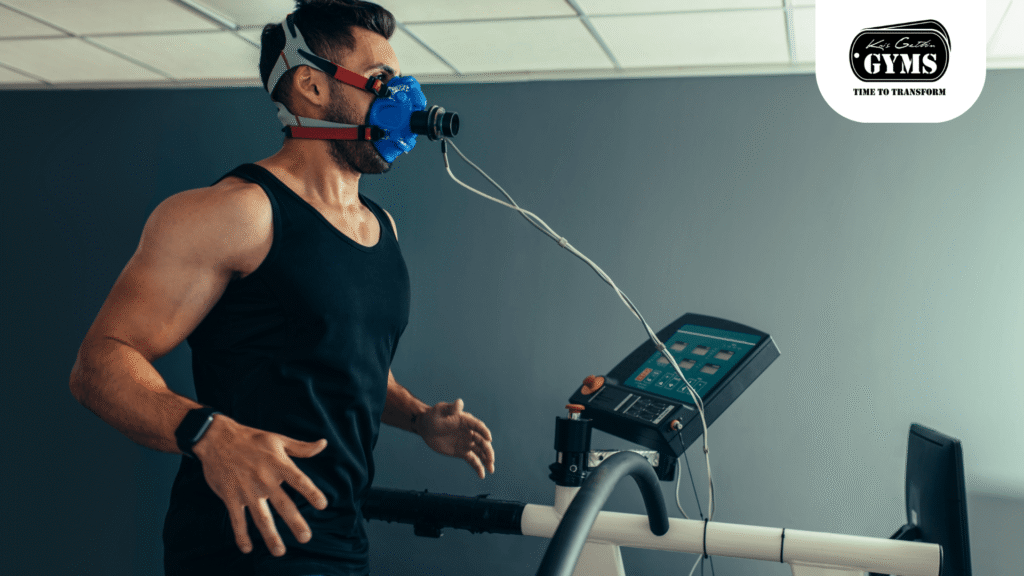
Ask any lifter what stops them mid-set, and most will point to their legs, their grip, their motivation. Rarely do they point to what’s actually happening in their chest.
Watch closely enough, though, and the pattern is obvious. The client gasping through the last thirty seconds of a HIIT circuit isn’t out of muscle.
They’re out of oxygen delivery, a lung and cardiovascular system that hasn’t been trained to keep pace with what the muscles are already capable of doing.
That gap, between what the legs can produce and what the lungs can supply, is exactly what VO2 max measures, and it’s considerably more trainable than most people assume.
Why Getting Winded Isn’t Always A Bad Sign
There’s a specific kind of breathlessness that shows up during a genuinely hard session, and it’s actually evidence of adaptation happening, not failure.
The best workouts push the lungs and heart into territory they don’t visit during easier, more comfortable training, which is precisely what triggers the cardiovascular improvements that raise VO2 max over time.
The opposite problem shows up quietly, hours spent hunched at a desk compress the chest cavity day after day, gradually eroding the stamina a body would otherwise have. Indian data on this specific gap is worth knowing, the average sedentary VO2 max in India tends to run lower than Western benchmarks, roughly 30 mL/kg/min for men and 20 mL/kg/min for women, well below the 35 to 40 mL/kg/min range considered healthy for men aged 18 to 45, or the 27 to 30 mL/kg/min range for women in that same bracket.
What VO2 Max Actually Represents
VO2 max is the maximum amount of oxygen the body can use during intense exertion, and it remains the gold standard measurement of cardiovascular fitness for good reason. A higher number translates directly into more sustainable endurance, the capacity to push a training session harder and longer before hitting a genuine physiological wall.
Several factors shape where this number sits for any individual. Age brings a roughly 10% decline per decade if left unaddressed. Higher body fat percentage generally correlates with reduced lung engagement during high-energy activity, part of a broader pattern where excess body fat carries respiratory risk alongside other health concerns.
Gender plays a role too, VO2 max in women tends to decline around 1% annually after age 30, accelerated further by menopause, muscle loss, and reduced activity levels, while men see a similar though somewhat slower decline pattern that consistent training meaningfully slows.
Environmental factors matter as well, heat, humidity, and pollution all restrict how efficiently oxygen actually reaches working muscles, adding real cardiovascular strain on top of the training itself. And a sedentary lifestyle sustained over years steadily erodes the body’s capacity to use oxygen efficiently during any kind of exertion.
The stakes here go beyond athletic performance. Research indicates that improving VO2 max by just 10% is associated with a 15% drop in all-cause mortality risk, a genuinely significant number for something as trainable as cardiovascular capacity.
Training The Lungs Directly Through Breathwork
Muscles respond to targeted training. Lungs respond the same way, and a handful of specific breathing exercises, each taking only a few minutes, build genuine airway strength over time.
Diaphragmatic breathing is the foundational move worth starting with. Sit upright, one hand resting on the belly, inhale deeply through the nose for two seconds, feeling the stomach genuinely push outward, then exhale slowly through the mouth across four seconds. Five minutes of this each morning strengthens the diaphragm directly, the primary muscle actually doing the work of breathing.
Box breathing serves a dual purpose, reducing stress while simultaneously improving oxygen flow. Inhale for four seconds, hold for four, exhale for four, hold empty for four, cycling through that pattern repeatedly. This technique works particularly well as preparation before an intense HIIT session, calming the nervous system before it gets pushed hard.
Pursed-lip breathing earns its place specifically during active recovery between heavy sets at the gym. Inhale deeply through the nose, purse the lips as if blowing out a candle, then exhale very slowly. This keeps airways open longer and deliberately slows breathing rate, making it a genuinely useful tool mid-workout rather than just a standalone practice.
The rib stretch directly counters the chest compression that hours of desk posture create. Standing tall, exhale completely, then slowly inhale while deliberately expanding the ribs as wide as possible, holding for five seconds before exhaling. This movement genuinely improves chest wall elasticity over consistent practice, undoing some of the postural damage that accumulates from sedentary hours.
Pairing Breathwork With HIIT For Real Gains
Breathing technique alone only accomplishes half of what’s needed. High-intensity interval training is what actually forces the cardiovascular system to adapt under genuine pressure.
A straightforward structure works well here, thirty seconds of sprinting in place or skipping rope, followed by thirty seconds of rest, repeated across ten rounds. This kind of structured session, alternating intense bursts with brief recovery windows, typically burns around 370 calories in a focused 25-minute session while simultaneously training the body to extract and deliver oxygen more efficiently under real physiological stress. Combining this training with the breathing exercises above compounds the effect considerably, stamina improves faster than either approach delivers in isolation.
The American Lung Association has noted that consistent aerobic exercise significantly improves overall lung function, and this holds true across a genuinely wide range of activities. Swimming, dance-based cardio formats, structured gym training, and running all contribute meaningfully to improved lung health, provided the effort is genuine and the consistency holds over months rather than weeks.
Why What’s On The Plate Matters As Much As Training
Physical training builds lung capacity through mechanical and cardiovascular adaptation. Nutrition supports that same system from a different angle entirely, protecting lung tissue from the oxidative stress that airborne pollutants and daily toxin exposure create.
Research indicates a diet rich in antioxidants can reduce lung function decline by roughly 21% over a decade, a meaningful protective effect worth taking seriously given how much pollution exposure has become an unavoidable reality in most Indian cities.
Apples and tomatoes carry genuinely useful compounds here, apples bring powerful flavonoids while tomatoes contribute lycopene, both working to reduce airway inflammation directly. Dark leafy greens, spinach, Swiss chard, kale, deliver natural magnesium, which functions as a bronchodilator, genuinely helping open constricted airways.
A hundred grams of spinach alone provides roughly 28 mg of vitamin C, supporting the broader immune and lymphatic systems alongside lung health specifically. Berries, blueberries, blackberries, strawberries, bring substantial vitamin C content protecting lung tissue from free radical damage, with blueberries carrying additional anthocyanins known for supporting cellular detoxification.
Garlic and ginger round out the list meaningfully, garlic’s allicin compound helps fight respiratory infection, while ginger supports clearing excess mucus from the chest, making a warm ginger tea a genuinely practical recovery habit after an intense training session.
Why This Deserves A Place In Every Serious Training Plan
One thing coaches consistently notice with clients focused purely on strength or aesthetics: cardiovascular capacity quietly becomes the limiting factor eventually, regardless of how strong someone gets on the floor.
This is exactly why breathwork and structured cardio training earn genuine attention in programming at KRIS GETHIN GYMS, not as an afterthought bolted onto a strength-focused plan, but as a core pillar supporting everything else a body needs to perform and recover well.
A single breathing session won’t transform anyone’s stamina overnight, and one apple won’t meaningfully improve lung health in isolation.
What actually moves the number is consistency, daily breathwork, regular HIIT training, and a diet genuinely built around foods that protect and support lung tissue, sustained over months rather than treated as a quick fix.