If you’ve ever searched “how much protein should I eat per day,” you’ve probably seen answers ranging from “as little as possible” to “double your body weight.” No wonder it’s confusing.
Protein is essential. It builds muscle, supports immunity, helps repair tissues, and keeps you full.
But more isn’t always better. The real answer depends on your body, age, and activity level.
Let’s break it down clearly.
What Is the Recommended Daily Protein Intake?
For the average sedentary adult, the Recommended Dietary Allowance (RDA) is : 0.8 grams of protein per kilogram of body weight Or 0.36 grams per pound of body weight
This is the minimum needed to prevent deficiency – not necessarily the optimal amount for performance or muscle growth.
Example :
If you weigh 70 kg (154 lbs)
70 × 0.8 = 56 grams of protein per day
If you weigh 75 kg (165 lbs)
75 × 0.8 = 60 grams per day
That’s your baseline.
Do You Need More Than the RDA?
Possibly. It depends on your lifestyle.
1. If You’re Over 40
Muscle loss (sarcopenia) starts gradually after 40.
Experts often suggest 1-1.2 g per kg to maintain muscle mass.
2. If You Exercise Regularly
If you lift weights, run, cycle, or train intensely :
- Moderate exercise : 1.1–1.5 g/kg
- Strength training/endurance athletes : 1.2–1.7 g/kg
Going above 2 g/kg daily generally provides no added benefit for most people.
3. If You’re Trying to Lose Weight
Higher protein intake can help reduce hunger and preserve muscle during fat loss.
But remember : Protein alone doesn’t cause fat loss – total calorie balance does
A good approach : 15–30 grams of protein per meal, spaced throughout the day
Is Eating More Protein Always Better?
Not necessarily.
Once your body meets its protein needs:
- Extra protein is used for energy
- Excess calories (from any source) can be stored as fat
- High intake from red or processed meat may increase heart risk
- Very high intake may stress kidneys in vulnerable individuals
The quality of protein matters more than just the quantity.
Focus on the “Protein Package”
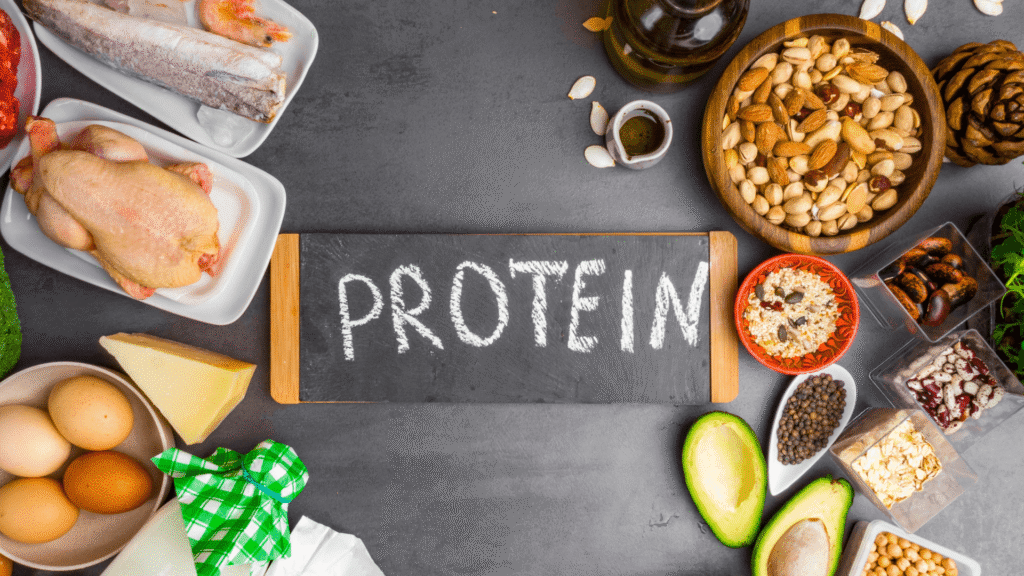
Instead of just counting grams, consider where your protein comes from.
Smart Protein Choices :
- Fish and seafood
- Skinless poultry
- Eggs
- Greek yogurt
- Beans and lentils
- Nuts and seeds
- Soy products
Be cautious about :
- Processed meats
- High-saturated-fat protein sources
- Sugary protein supplements
When Should You Eat Protein?
Most people eat very little protein at breakfast and overload at dinner.
Research suggests : Spreading protein evenly across meals may help with Appetite control + Muscle preservation + Energy stability
Aim for : 15-30 grams per meal
Eating 50 grams in one sitting doesn’t build more muscle than spreading it out.
Do You Need Protein Supplements?
Most people don’t.
You can meet protein needs easily with whole foods. Supplements may help if:
- You struggle to eat enough
- You’re under strict calorie restriction
- You have higher athletic demands
If using protein powder, look for :
- Low sugar
- Low saturated fat
- Around 200 calories or less per serving
- No trans fats
Are You Getting Too Much or Too Little?
In India, most adults meet or exceed protein needs – especially men aged 19–59.
However, you might not get enough if:
- You skip meals
- You follow restrictive diets
- You’re on weight-loss medications
- You’re underweight
If muscle loss is occurring during weight loss, protein intake should be reviewed.
So, How Much Protein Do You Really Need?
Here’s a quick summary :
Situation | Recommended Intake |
Sedentary adult | 0.8 g/kg |
Over 40 | 1–1.2 g/kg |
Regular exercise | 1.1–1.5 g/kg |
Intense training | 1.2–1.7 g/kg |
Above 2 g/kg | Usually unnecessary |
The ideal amount depends on your age, activity level, and goals.
Final Takeaway
Protein is essential – but it’s not magic.
You don’t need extreme amounts to build muscle.
You don’t need massive supplements to stay healthy.
You do need consistency, balanced meals, and adequate total calories.
If in doubt, calculate your intake based on body weight and adjust based on how you feel, perform, and recover.