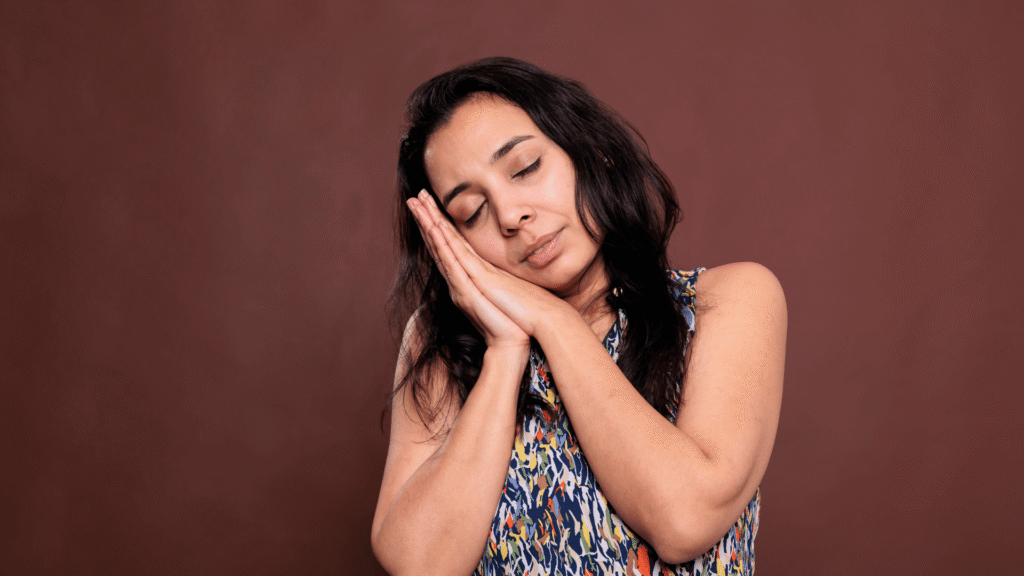
You can train six days a week.
You can track every macro.
You can push PRs, smash HIIT sessions, and still wonder why your body isn’t changing.
If sleep is being treated like an afterthought, that’s your answer.
Most people obsess over training and nutrition, but sleep quietly decides whether any of that effort actually pays off. It’s not passive rest. It’s when the real work happens.
Muscle repair. Fat metabolism. Hormone regulation. Nervous system recovery.
If workouts are the stimulus, sleep is the response. And without a strong response, progress stalls.
The Truth Most People Miss : Recovery Doesn’t Happen in the Gym
Training breaks your body down. That’s the point.
When you lift, you create tiny tears in muscle fibres.
When you run or do HIIT, you stress your nervous system.
None of that makes you stronger on its own.
Strength, muscle, and endurance are built after the workout – primarily while you’re asleep.
During deep sleep, your body :
- releases growth hormone for muscle repair
- reduces inflammation caused by training stress
- restores the nervous system, improving coordination and reaction time
The harder you train, the more sleep you need.
Trying to “outwork” poor sleep usually leads to stalled gains, constant fatigue, or injury.
Signs Your Sleep is Holding Back Your Results
Most people don’t realise sleep is the issue because they’re still technically “sleeping.”
Watch for these red flags :
- waking up tired even after 7+ hours
- workouts feeling heavier than they should
- low motivation or mental fog in the gym
- wild hunger swings and sugar cravings
- moodiness or irritability
These aren’t discipline problems. They’re recovery problems.
Sleep, Fat loss, and Hormones
If fat loss is your goal, sleep becomes even more important.
Poor sleep disrupts key hormones like :
- leptin (signals fullness)
- ghrelin (signals hunger)
- cortisol (stress hormone that promotes fat storage)
- insulin (controls how carbs are stored or used)
When sleep is poor :
- hunger increases
- cravings spike
- insulin sensitivity drops
- fat storage becomes easier, especially around the abdomen
Even worse, fatigue makes good decisions harder.
Missed workouts, overeating, and inconsistency follow naturally.
Fix sleep first – behaviour improves automatically.
Sleep and Fat Loss : What Research Actually Shows
One study looked at overweight adults dieting for eight weeks.
Both groups ate the same calories. The only difference?
One group slept normally.
The other slept about one hour less per night for five days a week.
Result?
The well-rested group lost significantly more fat.
The sleep-deprived group lost less fat – even though calories were controlled.
And the two “catch-up” sleep days didn’t undo the damage.
That’s how sensitive fat loss is to sleep.
Sleep and Muscle Growth : Where Most People Lose Gains without Knowing
Here’s the brutal part.
In a study where people slept only 5.5 hours per night while dieting, around 80% of the weight they lost came from lean muscle, not fat.
Compare that to those sleeping 8.5 hours – they preserved muscle while losing fat.
Less sleep doesn’t just slow muscle growth. It actively causes muscle loss.
And it gets worse.
Another study showed that just one night of total sleep deprivation :
- reduced muscle protein synthesis by 18%
- increased cortisol by 21%
- dropped testosterone by 24%
One bad night can undo days of training.
So yes – that late night after leg day absolutely matters.
How much sleep do you actually need?
General guidelines :
- Teenagers (14–17) : 8–10 hours
- Young adults (18–25) : 7–9 hours
- Adults (26–64) : 7–9 hours
- Older adults (65+) : 7–8 hours
If you train hard, sit closer to the upper end.
Recovery isn’t age-based alone – it’s stress-based.
Sleep and Mental Performance
Sleep doesn’t just affect muscles. It affects :
- focus
- learning
- reaction time
- mood
- motivation
Lack of sleep dulls training intensity and decision-making.
That’s why workouts feel “off” even when strength should be there.
Screens make this worse. Phone use before bed delays melatonin release and fragments sleep quality – even if total hours look fine.
The body may be in bed, but the brain isn’t recovering.
How to Treat Sleep Like Part of Your Training Plan
If you’re serious about results, sleep can’t be optional.
Start here :
- go to bed and wake up at the same time daily
- shut screens down at least 60 minutes before sleep
- avoid caffeine late in the day
- build a wind-down routine (stretching, reading, breathing)
- use blackout curtains or a sleep mask if needed
These are small habits – but stacked daily, they change everything.
What Improves When Sleep Improves
When sleep becomes consistent, you’ll notice :
- stronger lifts
- better endurance
- faster recovery between sessions
- reduced soreness
- steadier appetite
- better mood and motivation
That plateau you’re blaming on genetics or age?
It’s often just poor recovery in disguise.
Real Recovery is a Lifestyle, Not a Rest Day
Recovery isn’t something you “add in” once you’re exhausted.
It’s built into :
- your training volume
- your sleep routine
- your stress management
- your weekly schedule
Rest isn’t lazy. It’s strategic.
The strongest, leanest bodies aren’t built by doing more – they’re built by recovering better.
Train Hard. Sleep Harder.
Your workouts challenge your body.
Your sleep transforms it.
If you want better strength, faster fat loss, and consistent progress – don’t look for another program.
Look at your bedtime.