Why Rehabilitation is Essential After Intense Athletic Training
Rahul Gangatkar March 7, 2026 0
There’s a moment most serious athletes recognize.
It usually comes a day or two after a brutal training session.
The adrenaline from the workout is gone.
Muscles feel tight, joints feel heavy, and even simple movements remind you how hard you pushed your body.
Some athletes treat that feeling like a badge of honor. “No pain, no gain,” right?
But experienced coaches usually look at it differently.
They know that the hardest part of training isn’t always the workout itself. It’s what happens after the workout. That’s the phase many people underestimate – recovery and rehabilitation.
Training breaks the body down first. Improvement only comes later, when the body gets time to rebuild itself.
Without that rebuilding phase, the stress just keeps piling up.
And eventually the body forces you to stop.
Table of Contents
ToggleIntense Training Leaves a Mark on the Body
When athletes train at a serious level, their bodies go through a lot more than most people realize.
Heavy strength sessions create tiny tears inside muscle fibers. Sprint training puts enormous pressure on the joints.
Even skill-based sports like football, basketball, or tennis place constant strain on ligaments and connective tissues.
None of this is unusual.
In fact, it’s part of the process that makes athletes stronger. The body adapts to stress by rebuilding itself.
But adaptation only works if recovery is handled properly.
In the past few years, sports injury numbers have quietly increased. Some reports suggest sports and recreational injuries rose to around 17% in 2024. A big reason is simple : people are training harder, but they’re not always giving their bodies the structured recovery they need.
That’s where rehabilitation comes in.
Most Injuries Don’t Happen Suddenly
Ask athletes about their injuries and they’ll often remember the exact moment something went wrong.
Maybe it was a sudden pull during a sprint. Maybe the shoulder gave out during a heavy lift.
Maybe the knee started hurting during a jump.
But if you ask a few more questions, a different story usually appears.
The hamstring had been tight for weeks.
The shoulder felt stiff during warm-ups.
The knee had been slightly uncomfortable after long sessions.
Those small warning signs are easy to ignore, especially when performance feels good.
But the body rarely jumps from “perfectly fine” to “seriously injured” overnight.
Rehabilitation helps catch those problems early.
Instead of waiting for something to tear or fail completely, athletes can address tightness, weakness, or poor movement patterns before they turn into major setbacks.
Rehabilitation Is Not Just Rest
One common misunderstanding is that rehabilitation means doing nothing.
That’s not really how modern sports recovery works.
In most cases, athletes actually keep moving during rehabilitation. The difference is that the movement becomes more controlled and more focused.
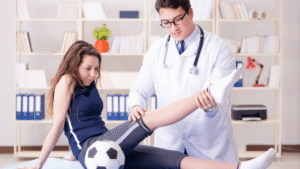
Mobility work might be introduced to restore joint movement. Light strengthening exercises help support injured muscles. Stretching and manual therapy can relax areas that have become overly tight from repeated training.
The body doesn’t heal faster by staying completely inactive.
It heals better when movement is guided properly.
Athletes Often Come Back Stronger
Something interesting happens during good rehabilitation programs.
Athletes start paying attention to parts of their body they usually ignore.
During normal training, most people focus on the main movements required for their sport. A sprinter focuses on speed. A lifter focuses on strength. A football player focuses on power and endurance.
But rehabilitation forces athletes to slow down and examine the smaller details.
Weak stabilizing muscles get attention. Tight joints are loosened. Poor posture gets corrected. Small imbalances that were hidden during normal training start getting fixed.
When the athlete returns to full training, those improvements can make a noticeable difference.
Movements feel smoother. Strength feels more balanced. Sometimes performance even improves beyond the athlete’s previous level.
The Mental Side of Recovery Is Real
Physical recovery is only part of the story.
Athletes are used to pushing themselves. So when they suddenly have to slow down because of fatigue or injury, it can feel frustrating.
Some start worrying about losing progress. Others worry that the same injury might happen again once they return to training.
Rehabilitation programs help rebuild confidence gradually.
Instead of jumping straight back into intense sessions, athletes progress step by step.
Each small improvement – lifting without pain, running comfortably again, regaining full movement – reminds them that their body is recovering.
Over time, that confidence replaces the fear.
And that mental shift can be just as important as the physical healing.
Different Techniques Help the Recovery Process
Rehabilitation programs don’t look exactly the same for every athlete. Different sports place different stresses on the body.
But certain recovery techniques show up again and again.
Mobility drills help restore normal joint movement after heavy training cycles. Massage therapy is often used to reduce muscle tension and improve blood circulation. Strength exercises rebuild muscles that may have weakened after stress or injury.
Some athletes also use low-intensity recovery workouts – light cycling, bodyweight movements, or swimming – to keep blood flowing without placing heavy strain on the body.
These methods might seem simple, but together they play a major role in keeping athletes healthy.
Recovery Time Varies
Not every rehabilitation process takes the same amount of time.
For minor fatigue or mild muscle strain, recovery may only take a couple of days. More serious injuries can require several weeks of structured rehabilitation.
In severe cases – especially ligament injuries or fractures – recovery may take months.
The biggest mistake athletes make is rushing back too early.
When the body hasn’t fully recovered, returning to intense training almost always leads to the same injury happening again.
Patience is difficult for competitive athletes, but it’s often the smartest choice.
Final Thoughts
Athletes love pushing limits. That mindset is part of what makes sports exciting.
But the body isn’t designed to handle endless stress without time to repair itself.
Rehabilitation gives the body that time.
It helps muscles rebuild, restores movement in joints, and allows the entire system to recover after intense training. More importantly, it prepares athletes to return to their sport without carrying hidden weaknesses or injuries.
The strongest athletes aren’t always the ones who train the hardest every day.
Often, they’re the ones who understand that recovery is part of the training process – not a break from it.
People Also Ask
Rehabilitation in athletic training refers to the recovery process athletes follow after intense workouts or injuries. It usually involves controlled exercises, mobility work, stretching, and sometimes medical treatment. The main goal is to restore strength, flexibility, and movement so the athlete can safely return to training or competition.
Rehabilitation helps the body recover from the stress caused by intense physical activity. Hard training creates small muscle tears, joint strain, and fatigue in the nervous system. Without proper recovery and rehab, these small issues can turn into injuries. Rehabilitation allows muscles and joints to repair themselves while preparing the body for the next training cycle.
The duration of sports rehabilitation depends on the intensity of the training or the severity of the injury. Minor muscle fatigue may only need one to three days of recovery. Moderate injuries can take several weeks, while serious injuries like ligament tears or fractures may require months of structured rehabilitation.
Yes, rehabilitation can actually improve performance. During the recovery process, athletes often work on weak muscles, poor mobility, and movement imbalances that may have been ignored during regular training. Fixing these issues can lead to better strength, improved flexibility, and more efficient movement when the athlete returns to full training.
Some common rehabilitation techniques include mobility exercises, stretching routines, strength rebuilding exercises, massage therapy, and low-intensity recovery workouts. These techniques help reduce muscle stiffness, improve circulation, and gradually restore strength and movement.