The first time someone walks into a proper commercial gym, there’s usually a moment where they just stand there and look around.
Not because they’re tired already – but because there’s so much equipment everywhere.
Machines with cables hanging from them. Rows of treadmills running non-stop.
Benches, racks, strange metal frames, and people using all of them like they know exactly what they’re doing.
For someone new, it can feel a little intimidating.
You might even wonder if everyone else understands something you don’t.
But once you spend a bit of time in the gym, you start noticing something interesting.
Despite how different all the machines look, most of them fall into a few basic categories.
In simple terms, gym machines usually fit into three groups :
- cardio machines
- strength training machines
- functional training equipment
Each group does something different for the body, which is why most gyms include all three.
The Cardio Area – Where Most People Begin
In many gyms, the cardio machines are easy to spot because they’re usually placed together near the entrance or along one wall.
You’ll see people walking, running, cycling, or doing something that looks suspiciously like climbing endless stairs.
The purpose of these machines is fairly straightforward: keep your body moving continuously so your heart and lungs work harder.
The treadmill is probably the most recognizable piece of equipment in the entire gym.
Even people who have never stepped into a gym know what it is. Walking on a moving belt doesn’t sound exciting, but it’s effective.
The useful thing is that you can control everything – speed, incline, and intensity.
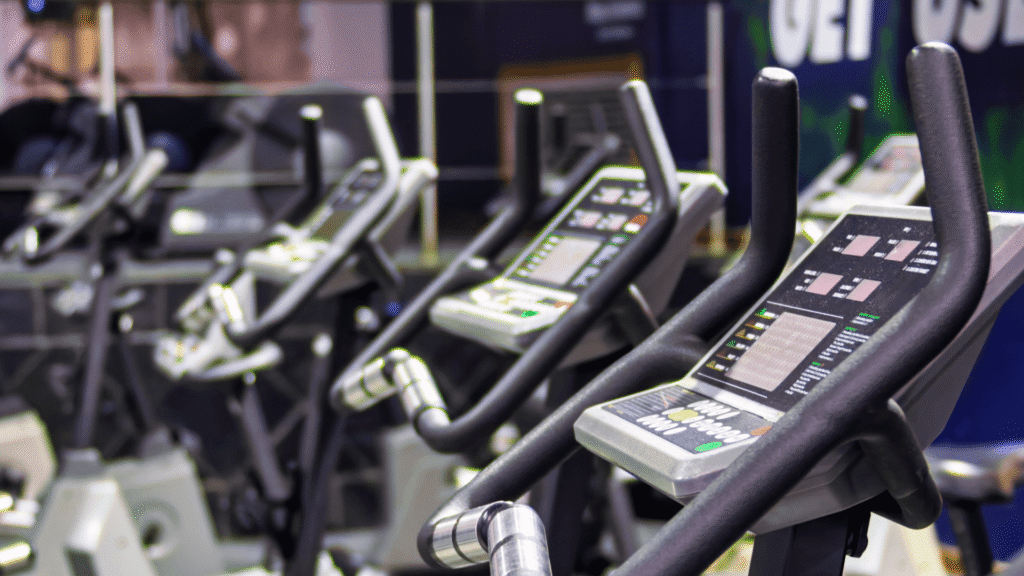
Exercise bikes are another common sight. Some are upright, others let you sit back slightly, and then there are air bikes that involve the arms as well as the legs.
Air bikes look harmless at first, but anyone who has pushed one hard for a few minutes knows they can get exhausting very quickly.
Elliptical trainers are often used by people who want something easier on the joints.
The movement is smooth and circular, which means there’s less impact compared to running.
Then there’s the stair climber. From a distance it doesn’t look that intimidating.
But once you step onto it and start climbing, you realise why people often step off after just a few minutes.
Rowing machines are sometimes overlooked, but they’re actually one of the most complete workouts in the gym.
When you row properly, your legs, back, arms, and core all work together.
Strength Machines – The Muscle-Building Section
Walk a little further into the gym and you’ll usually find the strength machines.
These are the machines with weight stacks, adjustable seats, and handles that move along fixed paths. The goal here is different from cardio. Instead of continuous movement, the focus is on resistance.
In other words, these machines make your muscles work against weight.
One of the first machines many beginners try is the chest press. You sit down, grip the handles, and push forward. It works the chest muscles along with the shoulders and triceps.
Nearby you’ll almost always find the lat pulldown machine.
The movement involves pulling a bar down toward your chest while seated.
This mainly trains the upper back muscles and is a common exercise for improving pulling strength.
Shoulder press machines are fairly self-explanatory. You press the weight upward while seated, targeting the shoulders and arms.
For lower body training, the leg press is extremely popular.
Instead of balancing a barbell on your shoulders like you would in a squat, you simply push a weighted platform away from your body using your legs.
Then there’s the Smith machine – a piece of equipment that looks like a barbell trapped inside a metal frame.
Because the bar moves along rails, it allows exercises like squats or presses to be performed with more control.
Functional Training Equipment – A Slightly Different Approach
Over the last decade or so, gyms have started adding more functional training equipment.
This type of equipment focuses less on isolating individual muscles and more on how the body moves as a whole.
Cable machines are probably the most versatile example. With adjustable pulleys and attachments, you can perform dozens of exercises – rows, chest flys, tricep movements, and plenty of core work.
Multi-gym stations combine several exercises into one machine. They often include pulleys, weight stacks, and attachments that allow different parts of the body to be trained without moving around the gym too much.
Some gyms also have cable crossover stations, which allow exercises that involve pulling from both sides of the body.
These setups are especially useful for movements that involve coordination and balance.
Why Understanding Gym Machines Helps
One thing that happens quite often is that beginners stick to only one or two familiar machines.
Maybe they use the treadmill every visit, or they repeat the same weight machine over and over because it feels comfortable.
There’s nothing wrong with that at first. But once you understand what the different machines are designed for, it becomes easier to build a more balanced routine.
Cardio machines challenge your stamina.
Strength machines help build muscle.
Functional equipment improves movement and stability.
When all three are included in a workout routine, training tends to become much more effective.
Final Thoughts
A gym full of machines can look complicated when you first walk in. There’s no way around that.
But the interesting thing is that once you start paying attention, the equipment begins to feel less random. Most of it is simply organized around three ideas: endurance, strength, and movement.
You don’t need to try everything on day one.
Start with a few machines that feel comfortable, learn how they work, and slowly add more variety over time.
Eventually, the machines that once looked confusing become familiar parts of your workout routine.
And that’s usually when the gym stops feeling intimidating and starts feeling like a place you actually enjoy being in.