I’ll tell you something I’ve seen again and again.
Two people train with the same intensity. Same exercises. Same trainer. Same program.
One of them transforms in 12 weeks.
The other looks almost the same.
The difference? It’s usually not an effort.
It’s protein.
Most people think muscle growth happens in the gym. It doesn’t. The gym only sends a signal. Growth happens later – when your body repairs what you broke down.
And protein is the raw material for that repair.
What Actually Happens When You Train
When you lift weights, you create microscopic damage in your muscle fibers. That sounds dramatic, but it’s normal. That damage is what tells your body, “We need to get stronger.”
Now your body has two choices:
- Repair those fibers properly and build them back thicker.
- Or just patch them up enough to survive.
Which one happens depends heavily on whether you give your body enough protein.
Because protein isn’t just food. It’s structure.
Your muscles are literally made of amino acids. If those amino acids aren’t available in sufficient amounts, the rebuilding process is limited.
You cannot build tissue out of nothing.
Muscle Protein Synthesis – The Real Game
There’s a process called muscle protein synthesis. Don’t worry about the technical name. Think of it as your body’s “muscle rebuilding mode.”
Training switches it on.
Protein fuels it.
If you train hard but don’t eat enough protein, muscle breakdown can actually exceed muscle building. That’s when people say:
“I’m working out but I feel weaker.”
“I’m training but not seeing growth.”
“I’m sore for days.”
It’s not always overtraining. Sometimes it’s under-fueling.
Why Timing Feels Important
There’s a lot of noise around the “anabolic window.” You don’t need to panic and chug a shake within five minutes.
But here’s what does matter.
After training, your muscles are more sensitive to nutrients. Giving your body 20–40 grams of quality protein within an hour or so is simply practical. It supports recovery while the signal is fresh.
More important than timing though?
Total daily intake.
If you’re serious about muscle growth, a good range is around 1.6 – 2.2 grams of protein per kilogram of bodyweight per day.
Most people underestimate how much that actually is.
A 75 kg person aiming for muscle growth might need 120 – 150 grams daily. That doesn’t happen accidentally. It requires intention.
The Amino Acid Trigger Nobody Talks About Properly
Protein isn’t just protein.
It’s made of amino acids. One of them – leucine – acts like a switch. When you consume enough leucine in a meal, it basically tells your body:
“Okay. Start building.”
That’s why higher-quality protein sources tend to work better per serving. Eggs, dairy, lean meats – they contain enough leucine to trigger that building response effectively.
Plant proteins can absolutely work too. You just need to combine them properly and sometimes eat slightly larger portions to hit the same threshold.
Recovery Is Where Protein Really Shows Up
You notice protein most when it’s missing.
When intake is too low:
- Soreness lasts longer
- Energy feels flat
- Strength plateaus
- Motivation drops
When intake is adequate:
- You recover faster between sessions
- You maintain strength during fat loss
- You feel more stable and resilient
- Training feels sustainable
Protein doesn’t just grow muscle. It protects it.
This becomes even more important during calorie deficits. If you’re trying to lose fat and protein is low, your body may break down muscle tissue for energy. Higher protein intake during fat loss helps preserve lean mass.
That’s the difference between looking “smaller” and looking “leaner.”
What About Muscle Soreness?
Protein won’t eliminate soreness completely. That’s a myth.
But it does support faster tissue repair, which means you’re less likely to feel wrecked for 4–5 days after one hard session.
In real-world gym environments, the lifters who eat enough protein are the ones who can train consistently without constantly needing extra recovery days.
And consistency is where results compound.
Whey, Casein, Whole Foods – What’s Best?
Whole foods should always be your base.
Eggs. Chicken. Fish. Greek yogurt. Paneer. Lentils. Tofu.
Supplements are just convenient tools.
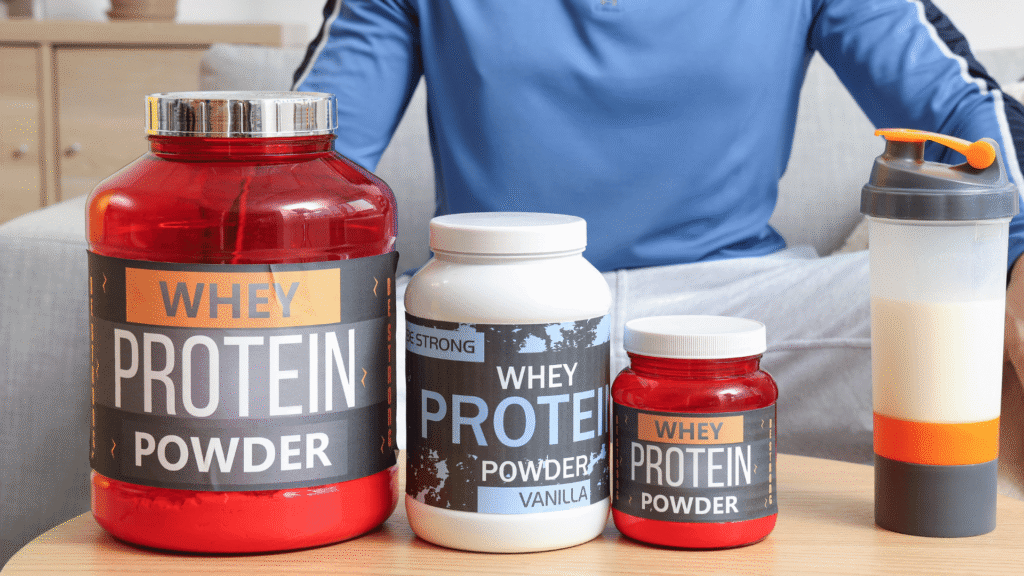
Whey protein is useful post-workout because it digests quickly. Casein digests slowly, which can be helpful before bed.
But no powder replaces daily structure.
If your total protein intake is solid, the specific form matters less.
Is High Protein Dangerous?
In healthy individuals with normal kidney function, higher protein intake within athletic ranges has not been shown to cause harm.
This fear often comes from outdated interpretations or cases involving pre-existing kidney disease.
For active individuals, higher protein intake supports performance, recovery, muscle retention, and metabolic health.
Context matters.
The Bigger Picture
Protein isn’t just about size.
It influences :
- Strength progression
- Hormonal balance
- Immune function
- Injury resilience
- Long-term muscle preservation
As you age, maintaining muscle becomes harder. Protein intake becomes even more important, not less.
Muscle isn’t just aesthetic tissue. It’s metabolic currency.
The Practical Reality
If you train hard but eat casually, your results will look casual.
If you train hard and fuel intentionally, your body responds.
Muscle growth isn’t mysterious.
Stimulus plus recovery equals adaptation.
Training provides the stimulus.
Protein supports the recovery.
Everything else is detailed.