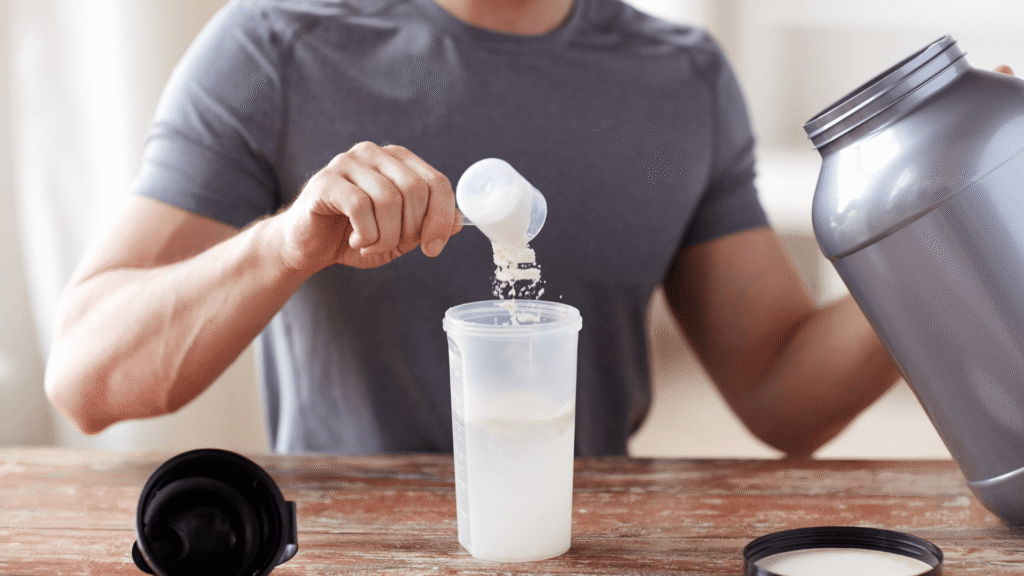
Walk into any gym for the first time and you’ll notice something quickly – almost everyone is carrying a shaker bottle.
Naturally, beginners assume : “If I don’t take protein powder, I won’t get results.”
But that’s not actually how fitness works.
The truth is simpler – whey protein is useful, not mandatory.
And whether you need it depends on one thing most beginners ignore: your daily protein intake from food.
Let’s clear the confusion properly.
First – What Whey Protein Actually Is
Whey protein is just milk protein separated during cheese production and dried into powder form.
That’s it. It’s not a steroid, not a chemical, and not a shortcut.
It’s simply a fast-digesting protein source containing all essential amino acids – the same building blocks you get from eggs, chicken, fish, paneer, or curd.
Think of whey as convenience food, not magic food.
Why Protein Matters More Than Supplements
Your body doesn’t build muscle inside the gym.
It breaks muscle in the gym – and rebuilds it afterwards using protein.
When beginners start training, their recovery demand suddenly increases.
If the body doesn’t get enough protein → recovery slows → progress stalls → soreness increases.
Most new gym members unknowingly eat far less protein than required.
Typical beginner diet :
- Roti / rice heavy meals
- Low protein breakfast
- Tea + snacks
- Minimal high-quality protein sources
So the real problem isn’t lack of whey protein – it’s lack of total protein.
How Much Protein Does a Beginner Actually Need?
A simple range works for almost everyone : 1.2 – 1.6 grams protein per kg body weight daily
Example : 70 kg person → needs ~85–110g protein/day
Now calculate honestly from food :
- 2 eggs = ~12g
- Dal = ~8g
- Chicken serving = ~20g
- Paneer = ~18g
Most beginners barely reach 40–50g.
This is where whey protein becomes helpful.
So… Do Beginners NEED Whey Protein?
You DON’T need whey protein if :
- You eat enough eggs, chicken, paneer, curd, fish daily
- You can comfortably reach your protein target
- You enjoy cooking protein-rich meals regularly
You DO benefit from whey protein if :
- You skip meals often
- You struggle to eat enough protein
- You have a busy schedule
- You want easier recovery after workouts
In simple terms : Whey protein doesn’t create results – it makes consistency easier.
Real Benefits Beginners Notice
Faster recovery
Less next-day soreness means you train more regularly.
Better strength progress
Muscles repair properly between workouts.
Controlled hunger
Higher protein intake naturally reduces overeating.
More visible results
Not because of whey – but because protein intake becomes adequate.
When Should Beginners Take Whey Protein?
Timing is flexible, but practical options work best :
- After workout (most convenient)
- Breakfast protein boost
- Between long meal gaps
What matters most isn’t timing – it’s total daily protein intake.
How Much Whey Protein Should a Beginner Take?
Start simple : 1 scoop per day (20–25g protein)
Not multiple shakes.
Not replacing meals.
Just filling the protein gap your diet cannot cover.
Common Beginner Myths
“Protein powder damages kidneys”
Healthy individuals consuming recommended amounts have no issues. The real problem is extreme intake, not normal usage.
“I’ll get bulky”
Muscle growth requires years of training and calorie surplus – not one scoop of whey.
“Natural food is always enough”
In theory yes. In real life, consistency is harder.
“Whey burns fat”
Calories decide fat loss. Protein only helps maintain muscle during dieting.
The Practical Way to Decide
Ask yourself one question daily :
Did I complete my protein target today?
If yes → whey optional
If no → whey useful
That’s the entire logic.
Final Thought
Beginners don’t fail because they didn’t buy supplements.
They fail because recovery doesn’t match effort.
Whey protein isn’t compulsory.
But for modern schedules and eating habits, it often becomes the simplest way to keep progress moving.
Use it as support – not dependency – and it works exactly how it’s supposed to.